
Dear Souls & Hearts member,
In the March 10, 2025, reflection The Key to Personal Statements: Getting God’s Identity Right First, I introduced you to “Mike,” a fictional character whose innermost self and parts have often appeared since then.
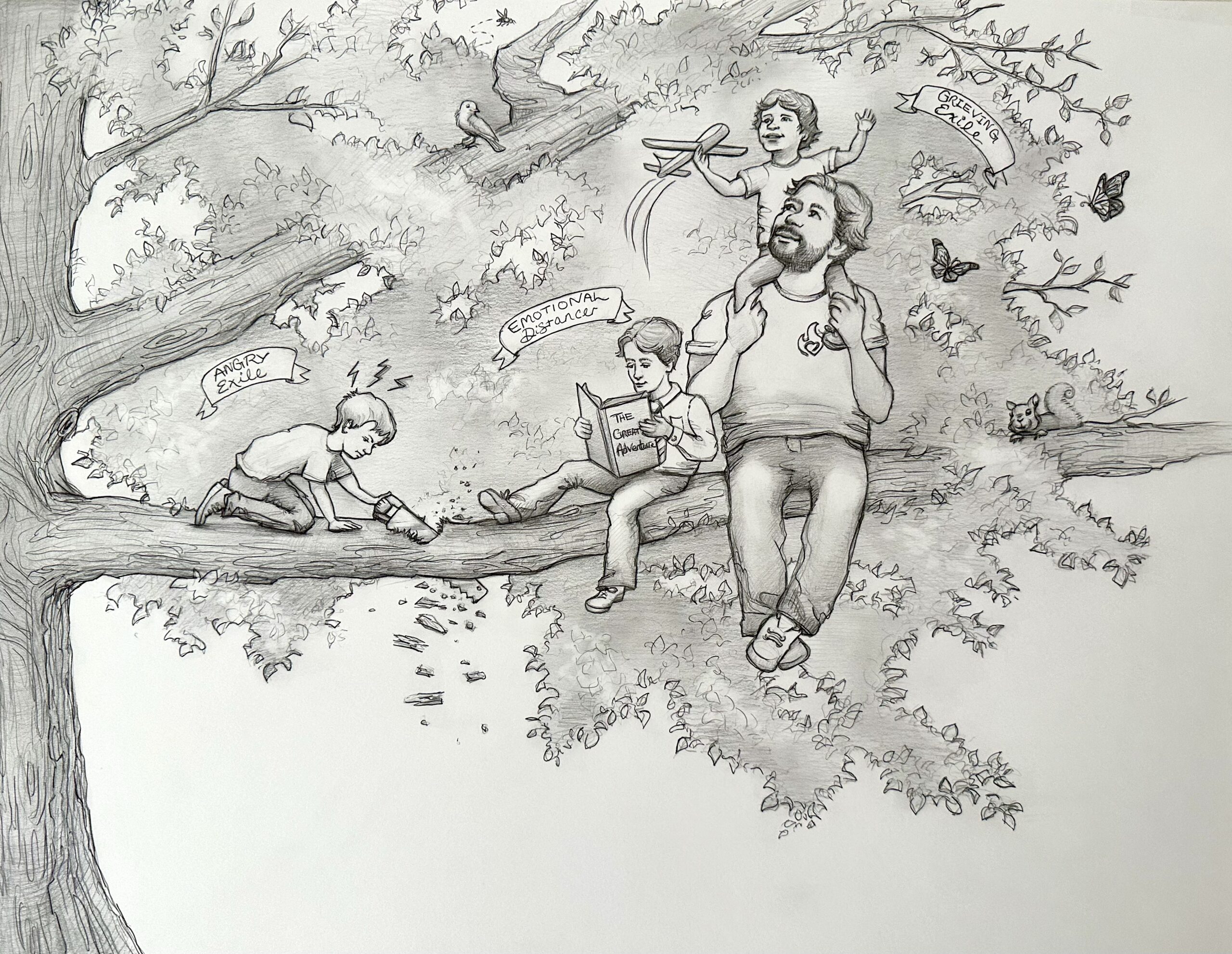
In the drawing above, you can see how Mike’s innermost self has made a deep connection with his grieving exile, hearing his story of the deep pain of loss, and who now is free to play.
But not every part is rejoicing.
Mike’s angry part is furious, because he believes that if the grieving part is unburdened from pain and distress, the injustice that caused the original wound will be forgotten.
And that’s not only unacceptable to the angry part, it’s dangerous. Because if Mike loses track of the pain of his parents’ divorce, he might not be motivated to work on the difficulties of his own marriage. And that would be bad and wrong.
Unbeknownst to Mike’s innermost self, his angry part is sabotaging the deep sense of well-being that his innermost self and the formerly grieving exile are experiencing together, because the angry part believes that the exile's deep, unresolved grief is the only thing that will motivate Mike to keep working on his marriage.
And Mike’s emotional distancer part is disconnecting his innermost self from the anger, not allowing him to see or sense the angry part, until the bough breaks and everything and everyone comes tumbling down.
Shooting yourself in the foot. Setting yourself up for failure. Self-handicapping. Undermining yourself. Even masochism.
The phenomena of self-sabotage has been recognized by thinkers and authors for millennia.
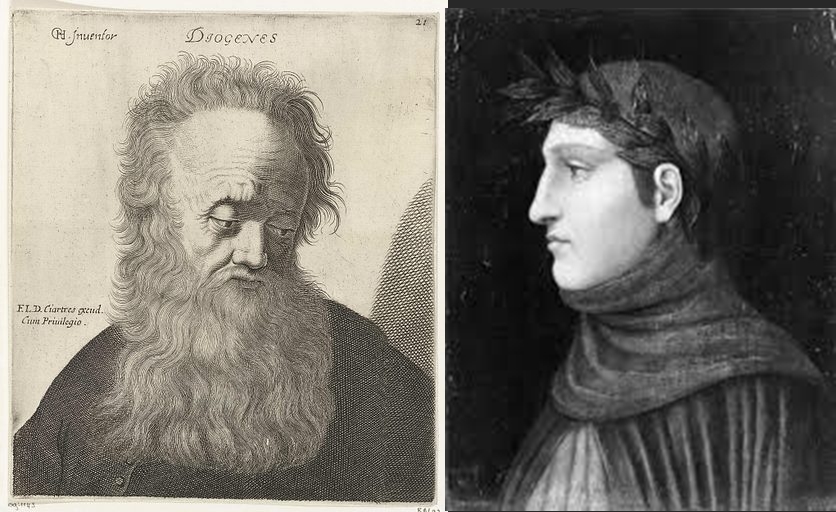
More than 2300 years ago, the Greek philosopher Diogenes stated that “No man is hurt but by himself.” And about 1700 years later, the poet and philosopher Plutarch wrote that “A man has no greater enemy than himself.”
Self-sabotage was major theme in some of Shakespeare’s plays, for example, when Brutus justifies the assassination of Julius Caesar, and Richard III’s scheming and conniving undoes himself, revealing how self-defeating major historical figures can be.
And this theme of undermining oneself resonates to the present day. Modern mental health professionals and coaches weigh in:
- Counselor Craig D. Lounsbrough: “I am the greatest obstacle to my dreams.”
- Strategy consultant Hunter Post: “The biggest thing holding you back is almost always… you. Start there.”
- Psychiatrist Mark Goulston: “Human beings invent just as many ways to sabotage their lives as to improve them.”
- Psychotherapist Nathaniel Branden: “What is required for many of us, paradoxical though it may sound, is the courage to tolerate happiness without self-sabotage.”
- The Psychodynamic Diagnostic Manual, 2nd: The psychoanalytic literature is rich in accounts of patients who behave in ways that seem strikingly antithetical to their own well-being and who appear unconsciously drawn to pain and suffering (“masochism”). [p. 31]
Why, why do I sabotage myself?
Naturally, the question of “why?” arises at this point. Why do wo do it? Why do we undermine ourselves so much? Because as Catholic author Evelyn Waugh stated, “When we argue for our limitations, we get to keep them.” The ways we defeat ourselves reminds me of Jeremiah 17:9 “The heart is deceitful above all things, and desperately corrupt; who can understand it?” In spite of the difficulties, let’s try to understand.
Author Gay Hendricks in his book, The Big Leap, gives us an introduction to the “why” of self-sabotage in this passage:
“I have a limited tolerance for feeling good. When I hit my Upper Limit [of happiness, love, success, etc], I manufacture thoughts that make me feel bad. The problem is bigger than just my internal feelings, though: I seem to have limited tolerance for my life going well in general. When I hit my Upper Limit, I do something that stops my positive forward trajectory. I get into a conflict with my ex-wife, get into a money bind, or do something else that brings me back down within the bounds of my limited tolerance.” [p. 7].
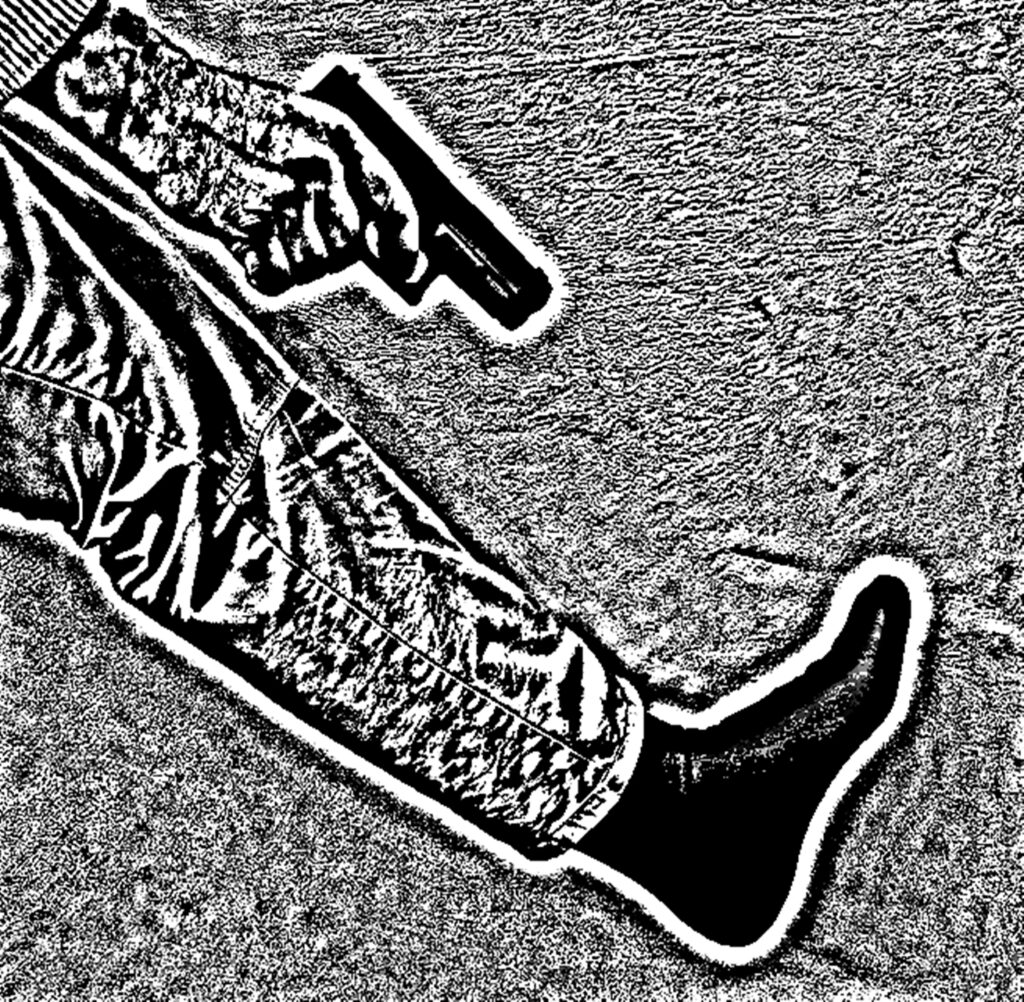
Hendricks describes four major hidden reasons why we compromise and undermine ourselves, settling for much less than what we could be.
Let’s take a look at each of these unconscious motivations for self-sabotage in turn.
Feeling fundamentally flawed
Although he doesn’t use the word, what Hendricks is driving at here is a deeply held shame. In nearly every person I’ve gotten to know well, there is at least one exiled part that bears a heavy burden of shame. I am convinced that shame drives so many symptomatic manifestations, including self-defeating behaviors, and in the Interior Integration for Catholics podcast, I spent episodes 37 to 49 reviewing and discussing shame at great length. (You can download a PDF with the titles, descriptions, and links to those episodes here.)
Shame comes in two primary varieties: First, a sense that one is ontologically bad, morally evil in one’s own essence, at one’s core; and second (perhaps more common), a deep sense of inadequacy and unworthiness. Psychologist Bill Crawford addresses the second type when he writes, “Nothing will sabotage our happiness and success more thoroughly than the fear that we are not enough.”
Gay Hendricks gives us the (often unconscious) reasoning behind self-sabotaging because of shame, in the internal question: “Given that I am fundamentally flawed (or wrong or bad) how can I possibly be this happy, rich, and creative?” [p. 46]. Experiencing success is uncomfortable, because we feel fraudulent and undeserving, and so we want to go back to the comfort of the familiarity of the dysfunction we know. Physical therapist and author Maureen Brady reinforces that point: “Sometimes we self-sabotage just when things seem to be going smoothly. Perhaps this is a way to express our fear about whether it is okay for us to have a better life.”
Hendricks doesn’t get into this, but so often, our exiled parts in their efforts to be seen, heard, known, and understood, generate impulses and desires that undermine our managers’ efforts toward success, because those agendas leave out and neglect are exiles, with their burdens of shame, disappointment, grief, anger, and other intense, unresolved experiences.
So often, the presentation of an image of success feels fraudulent to these suffering exiles, and if it were embraced fully, could leave those exiles in oblivion forever. So they, in an effort to survive and have their burdens lifted, undermine successes.
Disloyalty and abandonment
Hendricks sums up this unconscious motivation in the following way: “I cannot expand my full success because it would cause me to end up all alone, be disloyal to my roots, and leave behind people from my past.” [p. 48]
In essence, he is talking about the fear of losing significant relational attachments. The Psychodynamic Diagnostic Manual, 2nd Ed. (PDM-2) describes these dynamics quite well and somewhat technical language:
The more anaclitic version of masochistic dynamics, which overlaps with dependent personality, applies to patients who subordinate their needs to those of others and appeared to view suffering as a precondition for maintaining an attachment relationship. The attachment relationship may be experienced as desperately needed; fear of losing the attachment overrides the patient’s concerns for his or her own safety and welfare. [p. 32].
In this case, it is not so much shame-bearing exiles that drive the self-sabotaging impulses and desires, but rather managers, including self-sacrificers and compliant surrenders who are willing to compromise one’s own well-being in order to maintain and anxious attachment to another person. These parts value interpersonal connection at the expense of one's integrity, and often have difficulty recognizing good relationships that support both because their relational histories have not included such an experience.
Hendricks goes beyond dyadic and family relationships, to include the person’s culture and his or her social ties in the broader community.
Believing that more success brings a bigger burden
This idea cuts two ways. Hendricks identifies the first way: “I can’t expand to my highest potential because I’d be an even bigger burden than I am now.” [p. 52]. So many people have parts that believe that they are burdensome to others. These pessimistic parts assume that if one takes up “more space” or exerts more autonomy, or embraces more goodness, it will displease and frustrate other people, and negative consequences will follow. The PDM-2 sums this up as follows: The more paranoid version of masochistic dynamics involves the conviction that something terrible is bound to happen. [p. 33].
More common is the idea that if one is more successful, that one won’t be able to handle the additional responsibilities that come with greater success. In other words, one will not be able to deeply embrace the virtue of magnanimity, or greatness of soul. Parts with this idea often are concerned about coming across as fraudulent; imposter syndrome can result, generating a terror of failure, followed by exposure and shame. As poet and author R.J. Intindola stated, “The fear of failure has sabotaged many hopes and dreams.”
The crime of outshining
Gay Hendricks describes this as stemming from an assumption that, “I must not expand my full success, because if I did I would outshine _____________, and make him or her look or feel bad.” [p. 55].
Hendricks describes this is common among the “gifted and talented children, whose manager parts are focused on protecting other members of their family, or undermining their success, to reduce the potential that important others won’t feel threatened by it. He notes that another way to “resolve” the issue is to be successful, but to be unable to enjoy it; if one is suffering and miserable amid success, the success will have less negative impact on family members or other important relationships.
“Moral masochism”
The PDM-2 adds another dimension to our discussion on the motivations for self sabotage:
“The more introjective version of masochistic dynamics applies to patients who equate self-renunciation and suffering with virtue. In other words, the person’s self-esteem is tied to self-deprivation or suffering: the more self-deprivation, the greater the person’s sense of importance and virtue. This pattern includes patients who self-righteously seek to demonstrate that their suffering makes them morally superior to others… Such “moral masochism” is not uncommon in people drawn to the so-called helping professions, who attend other’s needs while neglecting their own.” [p. 32].
Parts that engage in moral masochism often use various forms of spiritualizing and spiritual bypassing to justify both the undermining of a felt sense of well-being and also achievement. Self-sabotage and its effects are not recognized as coming from within, but rather are seen as “crosses” or something “to be offered up.”
The consequences of self-sabotage
Gay Hendricks stated: “Each of us has an inner thermostat setting that determines how much love, success, and creativity we allow ourselves to enjoy. When we exceed our inner thermostat setting, we love do something to sabotage ourselves, causing us to drop back into the old, familiar zone where we feel secure.” [p. 20].
In my professional opinion, the consequences of self-sabotage in the lives of Catholics and the price we pay for this maladaptive coping mechanism are grossly underestimated. Self sabotage sucks the life out of us, as author Deborah Adele stated: “All self-sabotage, lack of belief in ourselves, low self-esteem, judgments, criticism, and demands for perfection are forms of self-abuse in which we destroy the very essence of our vitality.”
Parts work was not a major focus of Gay Hendrick’s book, but he does bring it in near the end, in a wrong way:
Suddenly my mind chimed in with a philosophical observation: “This won’t last forever, but it’s wonderful while it’s happening.” I realized with a chuckle that this commentary, whether wise or trite, was a subtle Upper Limit behavior. I had obviously exceeded my tolerance for backyard bliss. My Old Philosopher persona had shuffled in from the shadows to bring me back to earth. I gave the old fellow a loving pat on the back and sent him back to his quiet corner. Then I turn my attention back to where it belongs: feeling the blissful richness of this fine moment. [p. 201].
As an Internal Family Systems therapist, I don’t just want the Old Philosopher to shuffle off into the shadows again with his concerns unresolved; I want to meet him, get to know him, and free him from his burdens. Parts work is especially effective in resolving self-sabotage, because it is a constraint-release model. By definition, self-sabotage imposes constraints, constraints on happiness, success, love, and especially magnanimity. In The Resilient Catholics Community, we are on a pilgrimage toward thriving, toward flourishing with all of our parts, with none of them being sent away to their quiet corners in the shadows.
Only five days left to apply to the Resilient Catholics Community St. Luke’s cohort!
Do you have parts that seem to be self-sabotaging some aspect of your life? While it's natural to want to ignore, set aside, hide, or even exile those parts of yourself, they often find a maladaptive way to get your attention.
Learn a better way through the Resilient Catholics Community. Nearly 300 faithful Catholics are journeying together, learning to get to know those self-sabotaging parts along with many other parts of themselves? Why? Because all parts have a positive intention, and learning to see and hear them allows us to love and understand them in a new way. The result? We are then able to love God and neighbor more fully.
The St. Luke cohort of the RCC is open through midnight on Friday, February 28. We will then close until June 2026. Learn more and apply today.
Last call! Catholic therapists, priests, coaches, spiritual directors, and other formators!
We are finalizing our Spring FEG and Advanced Groups now. Learn more and register here. Here are the final groups with open slots:
- Bridget Adams: Foundation Experiential Group on Wednesdays from 9 AM to 10:30 AM Eastern
- Dr. Gerry: Surviving, Healing, Thriving, and Flourishing – A Path To Greater Integration, on Wednesdays from 10:00 AM to 11:30 AM Eastern
- Dr. Peter: Relating Wholeheartedly with God in Prayer, Mondays from 10:00 AM to 11:30 AM Eastern
Scripture for Your Inner Outcasts
I did today's episode of Scripture for Your Inner Outcasts, where I discussed the importance of loving your exiles who are hungry, thirsty and imprisoned. You can also check out yesterday’s episode from the First Sunday of Lent as Dr. Gerry and I discuss how Jesus goes about protecting our exiles and how protectors can also use maladaptive means to do so. Scripture for Your Inner Outcasts, to our knowledge, is the only podcast specifically for parts of us who are exiled and who feel alone, bringing light, love, and hope to our exiled parts. Check it out every day on our landing page or wherever you get your podcasts.