
Dear Souls and Hearts Member,
Years ago, I had a client who in the late winter would exclaim, “I HATE LENT!” In particular, he hated the penances that came with Lent; and this was understandable, given how he went about thinking about and carrying out penances. Ash Wednesday launches Lent for us in nine days, so it seems good to review penance in the context of parts work.
So often, different parts of us are not on board with the penances that our spiritual managers impose on our entire systems, in an unattuned and non-collaborative way. Often, the spiritual manager parts misuse penances to further their narrow agendas and suppress parts whose impulses and desires they find threatening. This invites pushback, and even rebellion from the suppressed parts, who can be highly motivated to undermine and even sabotage penitential practices.
In this reflection, I invite you to consider penances for this Lent in a more “wholehearted” way, in a process that considers what is good for all your parts. If a given penance is good for you, if it is best for any part of you, it will be best for all your parts, because of the inherent harmony goodness in God’s Providence. As a corollary, any penance that is actually harmful or destructive to any part of you will ultimately be harmful to all of your parts. That does not mean that all parts of you will like a particular ordered penance which is good for you. By their very nature, penances involve some sacrifice.
But ordered penances have restorative, healing, and renewing qualities to them, reconciling ourselves not only to our Lord and His Mystical Body, the Church, but also to ourselves, bringing greater integration within, reducing the internal conflicts that St. James recounts in his letter: “Those conflicts and disputes among you, where do they come from? Do they not come from your cravings that are at war within you?” [James 4:1].
The irony is that for so many serious, devout Catholics, Lenten penances increase the war within, the internal conflicts, in part because there is not collaboration among the parts around a common goal for the penance. Instead, the spiritual managers of many devout Catholics impose penances unilaterally, without considering other parts’ needs, concerns, and levels of understanding.
The teachings of the Church on penance
The Catechism of the Catholic Church discusses the three traditional forms of penitence: “The interior penance of the Christian can be expressed in many and various ways. Scripture and the Fathers insist above all on three forms, fasting, prayer, and almsgiving, which express conversion in relation to oneself, to God, and to others.” [§ 1434].
I find it so interesting that this CCC paragraph lists “conversion in relation to oneself” before conversion in relation to God and to others. I am not a spiritual director but in walking with so many clients and others, and hearing about their spiritual lives, I’m convinced that these three dimensions of conversion must go together, and without conversion in relationship with oneself, the conversion in relation to God and others is extremely difficult, if it is possible at all.
What I’m saying in a nutshell here is that we do not want to do actual harm to any part of ourselves, we do not want to be destructive and attack any part of ourselves in our penances. Instead, we are called to love ourselves in an ordered way, which I address at length in episode 98 of the Interior Integration for Catholics podcast, titled Self-Love: What Catholics Need to Know, and proper penances are a part of that ordered self-love.
Ordered fasting with parts
Let’s start with fasting. Here is the Catechism of the Catholic Church definition:
FASTING: Refraining from food and drink as an expression of interior penance, in imitation of the fast of Jesus for forty days in the desert. Fasting is an ascetical practice recommended in Scripture and the writings of the Church Fathers; it is sometimes prescribed by a precept of the Church, especially during the liturgical season of Lent (538, 1434, 2043).
Moderate fasting is required of adult Catholics aged 18-59 on Ash Wednesday and Good Friday.
I recommend that when considering fasting practices for Lent, beyond this bare minimum, that you bring proposed fasting practices up with your parts, and see how they land with your parts. Remember that parts all have a positive intention for you, even if the means they are inclined toward are disordered.
And let’s not just have a narrow definition of fasting that involves restricting food intake. St. Thomas Aquinas in his Summa Theologica, II-II, Question 147, Article 2, Reply to Objection 1 asserts that “Properly speaking fasting consists in abstaining from food, but speaking metaphorically it denotes abstinence from anything harmful, and such especially is sin.”
Parts cling to taking in unhealthy and sinful things because they misperceive them as good. It is so helpful in one’s parts work to get below the impulses and find the needs that the particular means are intended to meet.
For example, my Lover part and my Guardian part both deeply desire to eat chocolate when I have conflict with family members. If, under the impulse of my “Catholic Good Boy” part decide to give up chocolate for Lent, without addressing how overindulgence in chocolate is a maladaptive attempt to self-soothe when feeling injured by or worried about family members, I will miss important aspect of what that chocolate eating behavior means.
For example, if I decide to give up chocolate for Lent, it would be much better to have in place a way to soothe and reassure these parts that is adaptive and healthy, such as deliberately scheduling time after family phone calls or Zoom meetings so that my innermost self can tune in to these distressed parts, “being with” them, and helping them connect with Our Lady whom they find comforting.
If I just give up the chocolate with no consideration of the goods that my parts are seeking or the needs behind their impulses and desires, I might be able to suppress those parts and “white knuckle” it through, but this hardly seems to reflect the “conversion in relation to oneself” the Catechism teaches in paragraph 1434, above.
Praying with parts
The second traditional means of penance is prayer. I am a great advocate of praying wholeheartedly, with all of your parts. Quoting St. John Damascene, paragraph 2559 of the Catechism of the Catholic Church describes prayer as “the raising of one’s mind and heart to God.”
For so many Catholics, prayer is surprisingly difficult, more difficult than seems a reasonable. I describe these difficulties in the following reflections:
- The Secret Psychological Reasons We Fail to Make Time for Prayer
- Distraction and Prayer: Satan, Symptoms, or Something Else?
- Distractions in Prayer: When Our Parts Cry for Help
As I detail in these reflections, so often for us Catholics, our primary spiritual managers take over and control our prayer, leaving out other parts, especially parts deemed unpresentable and unacceptable to, and even unlovable by God, our exiled parts. Then our prayer becomes quite far from “wholehearted.”
Lent is a wonderful time to recognize how difficult prayer can be. The Catechism of the Catholic Church in paragraphs 2726-2728 lists many difficulties that we face in prayer. I would add to that list of difficulties the problematic, unresolved God images that our parts have; I detail these episodes 23 to 29 of the Interior Integration for Catholics podcast, and you can download a summary and links to these in this PDF.
The main point here is to get curious about why prayer is difficult for parts of us, and why parts may actively avoid prayer, addressing the underlying reasons to help parts have a greater felt sense of safety, protection, and a deeper, more accurate understanding of who God actually is, so that we can raise our whole mind and our whole heart to God, all of our parts joining in with our innermost self, as St. John Damascene and the Catechism recommend.
A second point to remember is that prayer is relational. That is a major theme in the best modern book on prayer I have ever read, Personal Prayer: A Guide for Receiving the Father’s Love by Fr. Thomas Acklin and Fr. Boniface Hicks. The way we relate with God is heavily conditioned by the way we relate with other human persons in the natural realm – therefore, we can use our natural relationships to better understand how our parts relate with God.
Almsgiving with parts
The Catechism of the Catholic Church defines “almsgiving” as “Money or goods given to the poor as an act of penance or fraternal charity. Almsgiving, together with prayer and fasting, are traditionally recommended to foster the state of interior penance.” (1434; cf. 1969, 2447).
Now we are talking about money. Aggregated statistics based on self-report survey data suggest that as a group, Catholics give less than other Christian denominations (see here and here for discussions). A common finding is that most Catholics do not give regularly. And there are all kinds of sociological reason proffered about why.
I think there are more than those reasons behind it.
Many Catholics are internally conflicted about money. Many parts of many Catholic (like other people) seek a felt sense of safety and protection in “having enough money.” But because money doesn’t really provide a sense of existential security after basic needs are met the “enough” in “enough money’ can become quite elastic and expressed by the formula
“Enough money” = money I have + X, where X is any relevant positive dollar amount
In other words, according to that formula, no amount of money is ever “enough.”
I think a primary reason Catholics do not give more alms is that they have manager parts who don’t trust that God will take care of their needs. They don’t feel comfortable “risking” giving more because they do not trust that God is loving Father and a Good Shepherd because of the distorted God image issues their parts hold (see my reflection The Top 10 Needs That Fuel Modern-Day Idol Worship for how unmet attachment and integrity needs coupled with problematic God images fuel attachments to worldly goods).
So, as you consider almsgiving during Lent, I encourage you to recollect your parts for a conversation about donations, about almsgiving, listening carefully to their concerns about increasing your almsgiving. In particular, listen to their concerns about what would happen if you stretched yourself in almsgiving, and listen for the underlying unmet attachment needs, integrity needs, and identity questions that drive those concerns about money and giving.
Parts might fear destitution, or they might sense that any additional money given might be at the cost of something else they feel they need to be OK. Can the underlying fears of “not having enough left” be addressed through a deeper trust in God’s Providence in some way, without steamrolling, manhandling or silencing parts?
Bringing it together
So in conclusion, let’s not look at penance as something to be endured and extracted from us like my client who hated Lent. Instead, let’s look at penance as a gift, and an opportunity to understand ourselves and our parts much more deeply. Let’s take the opportunity for a “conversion in relation to myself” as the CCC in paragraph 1434 teaches. And let’s pursue this with a childlike awe, wonder, and spirit of adventure. And, as always, it’s a very good idea to consult with a spiritual director or confessor who knows you about your penances.
The Resilient Catholics Community is now open for new applications!
And applications have been rolling in. The Resilient Catholics Community (or RCC) offers the structure and guidance our 270 or so members need to do their own parts work. So often, when Catholics consider their human formation (if they consider it at all) they think of counseling or psychotherapy or maybe coaching. And those are great means, especially if one needs individual attention.
But they are not the only ways.
The Souls and Hearts staff have brought together the very best resources to help your innermost self come to meet, know, understand, and love your parts. Interior integration, an ordered self-love are primary foci of the RCC – and not just so that our members feel better, but to better equip them to reflect love back to God and to one’s neighbor. We shore up the natural foundations of formation, doing the human formation arithmetic so that your spiritual formation algebra goes much more smoothly.
RCC members are on a pilgrimage to better human formation, so that we can thrive and flourish. Parts work helps our members to make so much more sense of what’s going on inside them, so that they can better live out the three loves in the two great Commandments: to love God, neighbor, and oneself in an ordered way.
The application process starts with the PartsFinder Pro (PFP), which is a set of measures that takes about 3-6 hours to complete, and at least two members of our staff generate a six- to nine-page PFP report that details our understanding of your hypothesized parts and the possible ways they interact within you. You can download a PDF for a sample fictional report for a man and a woman.
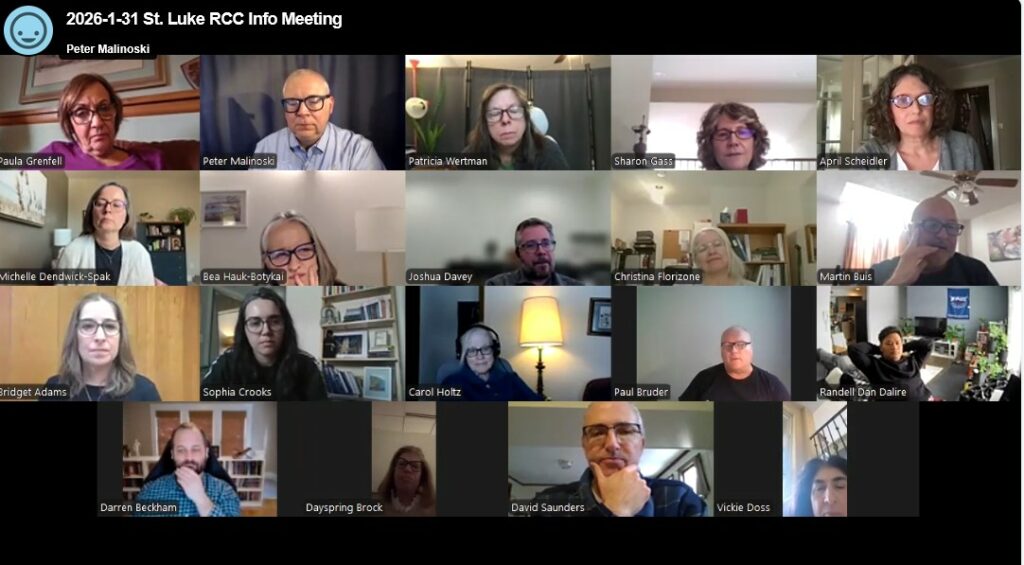
Check out our RCC landing page for testimonials of how life-changing the RCC has been for some of our members. Check out the RCC informational meeting from January 31, 2026 below for more information. If you are ready, register here.
And do not hesitate to reach out to us with questions at crisis@soulsandhearts.com or at 317.567.9594.
Calling all Catholic therapists, coaches, spiritual directors, and other formators
If you are a Catholic therapist, spiritual director, priest, coach or someone who is professionally responsible for the formation of others, you may be interested in our Spring Foundational Experiential Groups (FEGs). No IFS training is necessary, and we have two groups that are still open. Learn more here, and in our downloadable, shareable PDF flyer, but in brief, we have FEGs with:
- David Edwards on Monday evenings from 6:15 PM to 7:45 PM Eastern time, starting on March 2, 2026
- Bridget Adams on Wednesday mornings from 9:00 AM to 10:30 AM Eastern time, starting on March 11, 2026
Several advanced groups are also available for IFS Level 1 trained individuals or for those who have completed an FEG or the Stepping Stones program. Learn more here.
New Interior Integration for Catholics episode on moral questions!
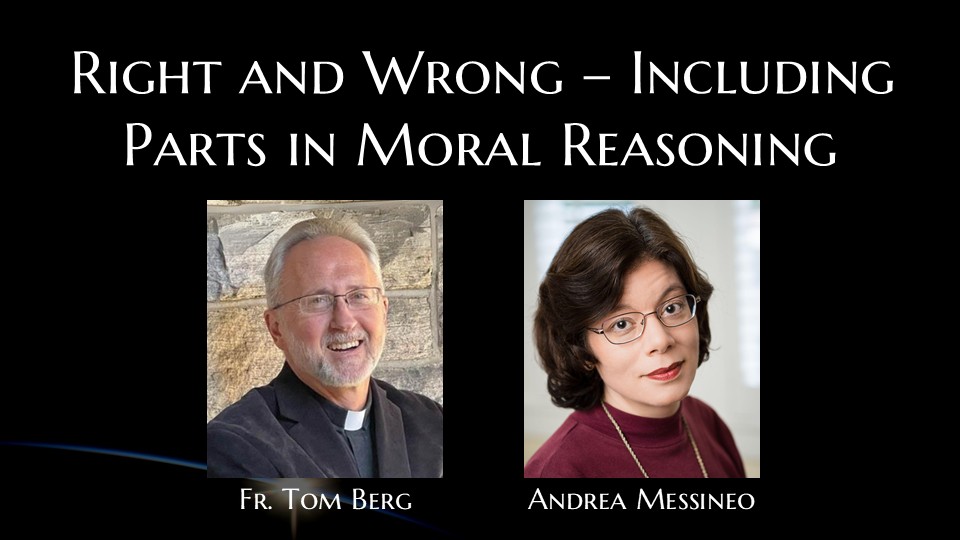
Catholic philosopher Dr. Andrea Messineo and moral theologian Fr. Thomas Berg guide us in moral reasoning from a parts perspective, grounded in Alasdair MacIntyre’s Thomistic thought. Join them in the latest episode of Interior Integration for Catholics as they romp through understanding the development of moral reasoning informed by IFS, “values clarification”, Winnicott’s object relations model, the importance of unblending and recollection for clarity in moral reasoning, the necessity of dependence on others, the proper use and the misuse of penance and mortification, how accepting a part does not mean endorsing that part’s impulses and desires, and so much more.
Scripture for Your Inner Outcasts
Today’s Scripture for Your Inner Outcasts episode is by Bridget Adams, member care coordinator of the RCC. She invites your childlike parts to embrace their desire to be near Jesus. You can also check out yesterday’s episode from the Fifth Sunday of Ordinary time as Dr. Gerry and I describe how our exiles are not destined to be hidden.
Scripture for Your Inner Outcasts, to our knowledge, is the only podcast specifically for parts of us who are exiled and who feel alone, bringing light, love, and hope to our exiled parts. Check it out every day on our landing page or wherever you get your podcasts.
Warm regards in Christ and His Mother,
Dr. Peter