

By Monty De La Torre, Ph.D.
In a previous reflection, I began to explain the metaphysics of the human person. The purpose of that reflection was to provide basic philosophical principles that ground the metaphysical reality of what a human person is. By extension, the purpose of this article is to introduce more principles for the sake of providing an initial attempt at an explanation of the metaphysical reality of parts, i.e., a metaphysical account of parts’ being and function.
My goal is to defend the following proposition: Internal Family Systems (IFS) is compatible with an Aristotelian-Thomistic (AT) understanding of the human person. I propose that an AT philosophical anthropology best provides the why behind the multiplicity and unicity of human personality and the intellect’s ability to reflect and dialogue with itself through the existence of subpersonalities.
If parts exist, which I argue they do, then how and why do they exist? How, from the point of view of AT metaphysics, do they operate or transition from potency to act? What role do parts play in our conscience? Emotions? Freedom of choice and sin? The development of virtue? Answering these questions and others will, I hope, bring more recognition and acceptance of IFS within Catholic circles.
The following exposition is not meant to be exhaustive. This is the beginning of an investigation that I hope will yield fruitful and corrective discussions with philosophers, theologians, and mental health practitioners of various intellectual persuasions. Again, this is a work in progress. I intend to explain, as best as I can, the metaphysics of parts as I write these reflections.
The soul
As I noted previously, “The soul is the substantial form of the body (i.e., think in hylemorphic terms: matter = body; form = soul). Soul is a term used to delineate a specific kind of substantial form, i.e., the substantial form that makes something to be alive or animate instead of inanimate. In other words, animate things have substantial forms, and we call those forms souls. Inanimate things also have substantial forms; however, we do not call those forms a soul. (For some helpful videos on this topic, watch videos 16-20).”
(Side note - in addition to matter and form, an act of existence is also necessary for the coming to be of any material and immaterial being. I am alluding to the real distinction between essence and existence. See here and here for more on this topic. Also, on the distinction between the animate and inanimate, see here [pgs. 132-138] and here [Ch. 6].).
Of those things that are animate, the Thomistic tradition has identified three kinds of souls that correspond to three different kinds of animate being.
Vegetative souls have the power to grow, reproduce, and take in nutrition.
Animal souls have the five external senses (sight, sound, touch, smell, taste), independent movement, and various appetites or passions of attraction or repulsion. In addition to the external senses, non-rational animals also have internal senses. More on these below.
The rational soul has all the powers of the previous two, but, in addition, the powers of intellect and will, “…that is to say, the power to grasp abstract concepts and to reason on the basis of them, and freely to choose between different possible courses of action on the basis of what the intellect knows.” (Feser, 2009, p.138) These latter powers are specifically what set human beings apart from all other animate life.
The philosophical anthropology described results in an incredibly important consequence: human beings come into existence once matter and form come together to form a substance. This happens at conception. At that moment, a new substance (i.e., a rational animal) exists along with all its potencies.
Our essence or formal cause determines these specifically human potencies. Thus, we arrive at the conclusion that a person’s capacity to reflect upon themselves via parts talk, i.e., a process of self-reflection involving reason, begins to exist in potency at that moment.
It is important to observe that not all potencies become actualized at once; and some may never become actualized in a person’s life. Be that as it may, a human being is in full possession of their potencies from the beginning of his or her existence. In other words, our parts are there from the beginning, whether they become actualized or not.
Intellect and will
The purpose or final cause of the intellect and will is to get us to know and choose the truth. We have the power to understand the truth of things and to order our lives accordingly. More succinctly, we have the power to order or direct the means and ends that lead us toward happiness or beatitude.
Proper human formation entails such teleology. I argue that an important component of human formation should involve therapeutic and spiritual work with our subpersonalities or parts. A primary task, if not, the primary task of unburdening or healing our parts is their reorientation toward the truth of things and away from maladaptive patterns of behavior or evil.
Maladaptive patterns, or constraints, can be the result of trauma, or some kind of emotional overwhelming event. Traumatic events can influence our body and soul. Our intellect and will, can become skewed by such experiences. I see IFS as a tool that can help reorient the soul and body toward the good.
A brief note on the immaterial nature of the intellect
Although the senses and the body are necessary means for our capacity to know reality, they are not sufficient. Why? For the following reason:
“Through seeing, hearing, tasting, touching, and smelling, we can only perceive individual, particular things: this triangle, that cat and so forth. But the intellect can grasp triangularity in general, ‘catness’ in general, and other universals, as essences which apply to indefinitely many individuals.” (Feser, pgs. 143-144)
Triangularity as a universal, is not dependent on any one material instance of triangularity for its existence. The disappearance of all triangles or human beings would not affect the existence of triangularity as such.
Since this is the case, and we can understand the concept of triangularity (i.e., we have the essence or universal in our mind), then we must have the power to grasp triangularity in the abstract, or else the universality of triangularity would escape us (for more on the immateriality of essences and universals, see here, Ch. 2).
Thus, the immaterial can only be accessed by that which has the power to do so. We have this potency because of our intellect. (A full discussion on the immateriality of the soul is outside the scope of this reflection. For a brief overview, see here, and here.).
The internal senses
The Thomistic tradition recognizes four internal senses in addition to five external senses. I noted above that animal souls have these internal senses. The rational soul is also in possession of these senses but in a qualified way given intellect and will.
These internal senses or powers have incredibly specific functions that help us to navigate the external world. They also make navigating our internal world and working with parts possible.
Through the external and internal senses our experience of life, including any trauma we may experience, gets recorded by the body and soul.
Aquinas noted that “…whatever is received into something is received according to the condition of the recipient.” Because we are rational animals, we receive the world in a personal way. I believe this accounts for the phenomenological experience of parts as resembling distinct people or subpersonalities within our psyche.
My eight-year-old exile part acts like a real person because the experience that he speaks from was taken from my experience at that age. The internal senses allow for this experiential data to be received and collected for future use.
The following definitions of the internal senses come from the Thomist Philosopher, Michael J. Dodds, O.P.
The common sense
“We easily notice that we are able to perceive the sensations of our external senses, distinguish among them, and combine them. What allows us to do all this is the common sense… In other words, this sense allows us to experience the external world as unified and not in a static compartmentalized fashion.
The common sense has the following functions:
- To know all the sensations of the external senses which are known separately by each of them.
- To compare and distinguish these sensations, e.g., color and taste.
- To be aware of the operations of the external senses.
- To distinguish real objects from imaginary ones.”
Imagination
The imagination is the storehouse for all sense impressions.
“It is distinct from the external senses, because an external sense cannot retain the impression of the sense object when this object is no longer acting upon the organ.” For example, when I close my eyes, I can no longer see anything, thus I no longer “retain the impression” of whatever I was looking at. Nevertheless, I can still recall (remember) what I saw (sense impression) after I closed my eyes.
“It is also distinct from the common sense because the common sense operates only when the external senses are sensing the object.” If the external senses stop operating, then nothing is being catalogued and stored away.
“The imagination has the following functions:
- To preserve the impressed species of the five senses that it receives through the common sense.
- To produce a phantasm …[the image of what is sensed]
- To combine images or phantasms (e.g., to picture unicorns, golden mountains, etc.).
- To know quantity, (For this reason, the imagination plays an important role in mathematics.).”
A phantasm is a mental image of the object perceived and not a concept. The image is singular whereas the concept is universal. (For more on this distinction, see here, pgs. 144-145).
The impressed species is a technical term for the sense image as impressed upon the sense organ.
It becomes apparent how imagination is at play when working with parts. The full range of sensations that a part will manifest must come from the phantasms of our imagination.
The estimative (cogitative) sense
Animals have a sort of instinctual or spontaneous power to perceive something good or harmful to them. For example, a sheep’s unease at the sight of a distant wolf. This is called the estimative sense.
Our estimative sense does the same and more. The difference is made by the intellect. Thus, in our case, it is called the cogitative sense. The processes listed below are executed with a similar kind of spontaneity.
“The cogitative power has the following functions:
- To know the relation between the individual thing and the common nature to which it belongs.” In other words, to understand the difference between a particular triangle from triangularity as such.
“2. To prepare the phantasm for the intellect.” It is one thing to have the raw data of what the senses take in, it is another for that data to be understood individually and universally.
“3. To deduce individual conclusions from universal premises:
M – P Stealing is evil.
S – M This is stealing.
S – P This is evil.”
“4. To serve as a kind of bridge between the intellect and the senses.”
It seems reasonable to suggest that our defense mechanisms, for example, those outlined by Nancy McWilliams, have some basis in the cogitative sense. If so, then it also seems reasonable to conceptualize parts as an actualization of our cogitative sense.
Parts actualize to protect the system, albeit, in unhealthy ways. This presupposes the identification of something outside of the system as a threat to it. This identification requires a power of its own, thus, the cogitative sense.
Memory
Memory is the power that can recall sense images and ideas as occurring in the past. More specifically, memory performs the following functions:
“1. To retain the perceptions of the estimative sense (i.e., to remember what is harmful and beneficial for the animal).
- To recognize past experiences specifically as ‘past.’ (While imagination retains information from sense experience, memory keeps that information in the context of specific past events.)
- In addition to these functions that are common to humans and other animals, humans also have the ability (called reminiscence) to search for a particular memory (as when we try to remember where we left the car keys).”
The role of memory in IFS stands out starkly during the witnessing stage of the unburdening process. For example, the kind of “movie reel” of the past that an exile will disclose showcases the intellect’s amazing power of reminiscence. It is important to keep in mind that the individual has the power of memory and not the part. I will say more about this distinction in a later reflection.
This reflection has focused on the powers of the internal senses and sense knowledge. These powers are partly responsible for our conceptualization and navigation of the physical world. In the next reflection, I will begin to take a closer look at intellectual knowledge and its implications.
###
Dr. Christin MacIntyre on applied Thomistic psychology discusses IFS
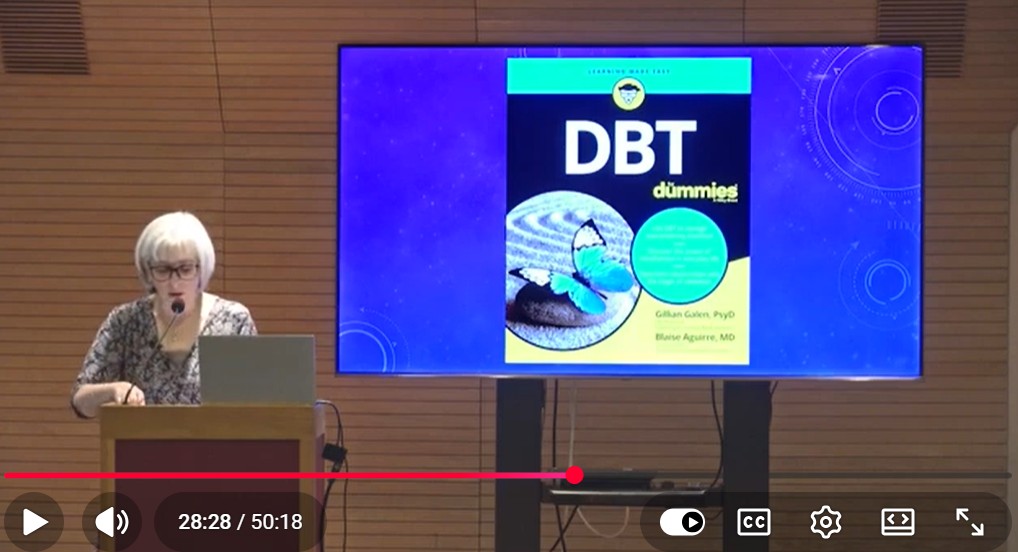
Check out psychiatrist Christin MacIntyre’s lecture on St. Thomas and IFS here, and Dr. Gerry’s Kingdom Within response here!
New Interior Integration for Catholics Episode!
Moral theologian Fr. Thomas Berg and philosopher and Catholic therapist Dr. Andrea Messineo take on the topic of personal conscience and parts work through a Catholic lens in IIC episode 180 titled Right and Wrong: Conscience and Catholic Parts Work (video audio). We explore the relationships among conscience, parts, the innermost self, the intellect, the will, impulses, and desires. We address concupiscence and parts, and offer specific examples. Join us for a fascinating exploration of conscience and parts.
Scripture for Your Inner Outcasts
Pam Malinoski wonders if exiles sometimes feel driven out as more acceptable parts take front-and-center in your system in today’s episode of Scripture for Your Inner Outcasts. You can also check out yesterday’s episode from the Third Sunday of Lent as Dr. Peter and Dr. Gerry discuss how Jesus is attuned and makes room for exiles. Scripture for Your Inner Outcasts, to our knowledge, is the only podcast specifically for parts of us who are exiled and who feel alone, bringing light, love, and hope to our exiled parts. Check it out every day on our landing page or wherever you get your podcasts.
Christian IFS therapist Ann-Marie Bowen offers workshop on parts mapping and externalizing parts

Dr. Peter’s colleague and friend, Ann-Marie Bowen is offering a three-hour online workshop for therapists and counselors on parts mapping and externalizing parts on Friday, April 17. 2026. Check out this flyer for more details and register here. Note: this workshop is not sponsored by Souls and Hearts.