
Dear Souls & Hearts Member,
I have a confession to make.
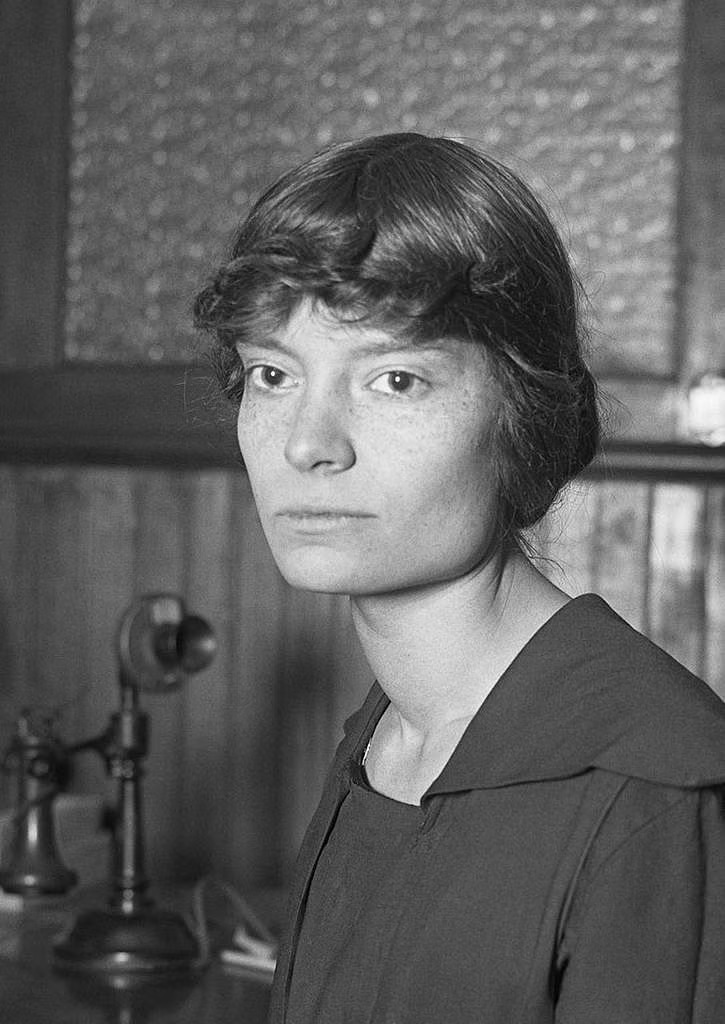
I am afraid of Dorothy Day.
Why?
Because ever since I first encountered her writings, she seemed so intense, so demanding, and she never shies away from saying the hard things out loud.
A few weeks ago, I ran across this quote from her in Selected Writings, and it struck me so hard:
"You only love God as much as you love the person you love the least."
I invite you to read that quote over again, and just let the implications sink in for a minute.
I imagine there are a number of ways to measure one’s love for God and Dorothy Day’s premise is debatable. But when I consider her saying in the light of Matthew 25:40, in which Jesus tells us “Truly, I say to you, as you did it to one of the least of these my brethren, you did it to me” and St. John in 1 John 4:20 “If any one says, ‘I love God,’ and hates his brother, he is a liar; for he who does not love his brother whom he has seen, cannot love God whom he has not seen,” it just makes intuitive sense. And Dorothy Day’s words haunted me.
"You only love God as much as you love the person you love the least."
Because I have a person in my life who I have clearly loved the least over the past many years.
Love is more than an act of the will
Now with this person that I have loved the least in my life, I’ve been considering the nature of love. Twenty-five years ago, when I was but a wee psychologist, I thought it was sufficient to live my clients primarily through acts of my will. However, I found out very quickly that the clients whom I liked recovered much more quickly than clients for whom my “loving” was cooler, more clinical, more focused primarily exercise my will and intellect.
And as a young psychologist, I reflected on how our Lord Jesus Christ described love in the first great commandment: “You shall love the Lord your God with all your heart, and with all your soul, and with all your strength, and with all your mind; and your neighbor as yourself.” [Luke 10:27].
Jesus does not call for loving with the will and intellect alone; in fact, he doesn’t even lead with the will or intellect. He leads with the heart, then the soul, then the strength (which is where the will might be located) and then the mind (the intellect). Will and intellect seem to take third and fourth place, after the heart. Jesus wants us to love with every fiber of our being not just with two faculties.
As Catholic philosopher Josef Pieper explains in Faith, Hope, Love, “A necessary assumption is that before we have that impulse of the will, we find it ‘good’ and ‘wonderful’ that this other, this beloved person, exists. In other words, we must previously have perceived that the other’s existence, and the other himself, is something good and wonderful.” [p. 171].
See the other as “something good and wonderful” requires more than just the will, and it precedes the impulse of the will, according to Pieper. And experiencing the other as “good and wonderful” will necessarily evoke an emotional response, a response from the heart.
The ratio of love obligations
And then I got to thinking about the love I owe to this least loved person in my life. I was thinking about how St. Thomas Aquinas discusses the ordo caritatis, or the “order of charity.” The order of charity requires that we attend to, care for, and love those nearest to us in relationship and responsibility, given our vocations and duties of state.
So, being a mathematically-minded guy, I started to think of a ratio, where on the top, in the numerator is how much I love a person, and in the denominator, on the bottom is how much I am called to love that person. And for my least-loved person, the denominator is pretty big. I am called to a fair amount of love for that person.
Loving the whole person
And then I got to consider about the important of loving the whole of my least-loved person, all of that person. Plato, in his Symposium, wrote “Love is the pursuit of the whole” and in his Republic, “…if a man can be properly said to love something, it must be clear that he feels affection for it as a whole, and does not love part of it to the exclusion of the rest.”
Loving can’t be about picking and choosing the most desirable qualities or parts of a person to love – if I am to better love my least-loved person, I must love her in her entirety, in all of her being. (For more on Plato about love, through an IFS perspective, check out episode 171 of the IIC podcast, titled Know Thyself, Love Thyself, Govern Thyself: Socrates and Plato Discuss Parts Work.)
Loving myself to better love my least-loved person
And then I forayed into considering how what I reject in myself I will reject in others. In episodes 98 and 173 of the IIC podcast, we examine why St. Thomas Aquinas argues that you cannot love your neighbor more than you love yourself, and how ordered self-love is a requirement for loving others. So often, our least-loved neighbors reveal to us the parts of ourselves that we love the least, parts of ourselves that we actually hate.
And that got me thinking about parts.
Bringing in some corollaries
Definitions first. What (or who) are these parts? I frequently say that “Parts feel like separate, independently operating personalities within us, each with own unique prominent needs, roles in our lives, emotions, body sensations, guiding beliefs and assumptions, typical thoughts, intentions, desires, attitudes, impulses, interpersonal style, and world view. Each part also has an image of God.”
Let’s review Dorothy Day’s quote again:
"You only love God as much as you love the person you love the least."
So a clear corollary then follows, namely that if you want to love God more, you should focus on loving more deeply the person you love the least. And second, given the demands of the order of charity, you should consider loving a near neighbor better, possibly someone in your household or close circle, because of the ratio of love obligations. And then third, following St. Thomas Aquinas, you may need to love yourself more in order to raise the limits of how much you can love our neighbor.
As we bring in parts and systems thinking, we get more speculative now, so consider the following corollaries as ideas to be thought about; I am still working this out in my own mind, and appreciate corrections and feedback (you can reach me at crisis@soulsandhearts.com or on my cell at 317.567.9594, especially during my conversation hours, every Tuesday and Thursday from 4:30 PM to 5:30 PM Eastern time).
More speculative corollaries, bringing in parts
I wonder if it is true that we only love our least-loved neighbor as much as we love the least-loved part of our least loved neighbor. In other words, given Plato’s suppositions above, if a woman despises a workaholic part of her husband, does she only love her husband as much as she loves the workaholic, avoidant part of him that she loves the least?
And what if her contempt of this workaholic part of him stems from her own disgust and anger at parts of a part of herself who wants to escape from the misery and conflict in their family life in the evenings? She rejects and suppresses the parts of herself that carry impulses and desires to flee from her home in the evenings because if she allowed such thoughts into her conscious awareness, an inner critic part would condemn herself as a “bad mother.” But her love for her husband is diminished because of her (unconscious) envy of him for successfully avoiding the difficult home life in the evenings.
If the wife were able to acknowledge and embrace parts of herself who want to flee home life instead of suppressing or repressing them, to recognize their attachment needs and their integrity needs, she would be in a better place to accept those same needs in her husband’s parts.
Catholic parts work helps us love better
In the next reflection on June 22, I will discuss how we can bring these ideas together and lay out clear and practical ways to help each of us love God, neighbor, and ourselves better. So stay tuned for that!
Warm regards in Christ and His Mother
Dr. Peter Malinoski
###
Do you want to learn to love better? The Resilient Catholics Community is open for new applications until June 30
Loving God, neighbor, and self much better is what the Resilient Catholics Community is all about. If you are into parts work, if you want to flourish in loving, if you want to join other Catholics is a pilgrimage to thriving in being loved and loving, the RCC may be just what you need. Every February, June, and October we accept application for new members.
The RCC provides intensive human formation, all informed by Internal Family Systems and grounded in a Catholic understanding of the human person. Our Souls and Hearts team pulls together the best of both spiritual and secular resources to help your innermost self come to see, hear, know, and understand your parts and to love them, so that you can better love God and your neighbor.
So often, the impediments to better loving are not primary spiritual. So many spiritual problems are actually downstream consequences of issues in human formation. And St. John Paul II assert that human formation is the basis of all formation, including spiritual formation. In the RCC, we work on the arithmetic of human formation so that we can better do the algebra of spiritual formation (see IIC episode 134 titled Looking at Integrated Personal Formation Through a Mathematical Lens) where I flesh that who metaphor out more fully).
As part of your application, you’ll take the PartsFinder Pro (PFP), a series of 23 measures designed to help you come to know and understand 12-15 of your parts – managers, firefighters and exiles. For examples, see these downloadable PDF sample fictional reports for a man and a woman.
More than 800 Catholics have taken on this pilgrimage to better human formation, together, in community. For more information, check out the RCC landing page, check out our recent RCC informational meeting in video or audio, and listen to this 19-minute experiential exercise to help you discern about applying to the RCC.
Or, if you're ready for a short-course in IFS, check out episodes 157, 158, and 159 of the Interior Integration for Catholics podcast.
Still have questions? Reach out to me, Dr. Peter, at crisis@soulsandhearts.com or at 317.567.9594.
Catholic formators: Two days left until our free webinar on June 10, 2026
Our webinar, Catholic Parts Work in Human Formation, will be on the evening of June 10, 2026 at 8:00 PM to 9:30 PM Eastern (register here). All Catholic priests, therapists, coaches, spiritual directors, and others who individually accompany Catholics in their personal formation are invited for an introductory workshop to better understand parts work and IFS grounded in a Catholic anthropology and metaphysics.
This workshop assumes that you have taken in the information from the previous workshop on January 13 titled IFS Basics for Catholic Formators or have at least a little experience in parts work in accompanying others in their formation.
- 8:00 PM to 8:30 PM Talk on preparing yourself to accompany others with IFS/part work.
- 8:30 PM to 8:50 PM Experiential exercise, where you experience your own parts’ reactions to accompanying others
- 8:50 PM to 9:10 PM Debrief from experiential exercise
- 9:10 PM to 9:30 PM Q&A and discussion
Join us by registering here for that free workshop.
And don’t forget, we have an in-person retreat for you, from August 10-13, 2026 in Bloomington, IN titled Authentic Being and Authentic Relating. Check out all the details here.
Scripture for Your Inner Outcasts episodes
Dr. Peter explains how the Sermon on the Mount is addressed to you exiles in today’s episode of Scripture for Your Inner Outcasts. You can also check out yesterday’s episode from the feast of Corpus Christi as Dr. Gerry and Dr. Peter discuss exiles bring intimacy and the desire for union that your internal system needs. Scripture for Your Inner Outcasts, to our knowledge, is the only podcast specifically for parts of us who are exiled and who feel alone, bringing light, love, and hope to our exiled parts. Check it out every day on our landing page or wherever you get your podcasts.