
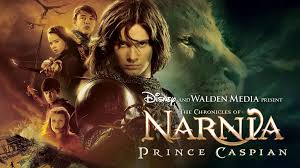
I want to begin with an honest admission: Prince Caspian is not the most beloved of the Narnia films, and the book, while deeply important, is not Lewis at his most luminous. Lewis himself acknowledged in letters that he felt Prince Caspian was somewhat less successful than the other Chronicles.
It lacks the concentrated spiritual beauty of The Voyage of the Dawn Treader and the mythic power of The Lion, the Witch and the Wardrobe. It is, in some ways, the most difficult of the Narnia stories, not because it is dark, but because its central themes are quiet and interior in ways that resist easy dramatization.
And yet.
And yet I have come to believe, the more I sit with both book and film from a Catholic and parts work perspective, that Prince Caspian may be the most psychologically honest of all the Narnia stories.
It is a story about what happens to faith, and to identity, in the long silence. It is a story about what wounded pride does to leadership, what a stolen inheritance does to a young man's soul, and what it costs to trust again after trust has been broken. It is, in short, a story that I recognize from the therapy room. I recognize it from my own interior life. And I suspect many of you will recognize it from yours.
The 2008 Disney and Walden Media film, directed by Andrew Adamson, is in many ways a deeply frustrating adaptation. It takes this quiet, interior story and buries it under an avalanche of battle sequences, inflated running time, and franchise-minded spectacle.
And yet, unlike the Dawn Treader film, it does not entirely lose the interior core. The most important psychological and theological material in Prince Caspian survives the adaptation, sometimes despite the filmmakers' best efforts. It is worth examining carefully.
So let us begin.
A brief recap
The film opens in the ancient Telmarine castle of Miraz, where Queen Prunaprismia has just given birth to a son and heir. This is a crisis for the infant Prince Caspian as his uncle Miraz, who has been ruling Narnia as Lord Protector since the death of Caspian's father, now has a legitimate heir of his own and no longer needs the nephew he has always regarded as a political inconvenience.
Caspian's tutor Doctor Cornelius wakes him in the night and sends him fleeing into the dark forest on horseback, pressing into his hands a magic horn, the horn of Queen Susan, left behind from the Golden Age of Narnia with instructions to blow it only in the direst need.
Caspian rides blindly into the night, falls from his horse, and wakes to find himself surrounded by creatures he has been told all his life are myths: Trumpkin the dwarf, Nikabrik the dwarf, and Trufflehunter the badger, Old Narnians, the remnant of the true Narnia that the Telmarine conquest has suppressed, driven underground, and officially declared nonexistent for over a thousand years.
Meanwhile, back in England, the four Pevensie children, Peter, Susan, Edmund, and Lucy, are waiting on a railway platform to return to their separate schools when they are suddenly and violently pulled back into Narnia. They arrive on a beach near the ruins of Cair Paravel, their ancient castle, now overgrown and crumbling. A year has passed in England. Over thirteen hundred years have passed in Narnia. Everything they built is gone.
The children and Caspian's forces converge, though not without difficulty and conflict, particularly between Peter and Caspian, who are both, for different reasons, fighting for authority and significance.
The Old Narnians are outnumbered, out armed, and increasingly desperate. In their desperation, several critical mistakes are made: a catastrophic night raid on Miraz's castle, Peter's stubborn pride, and most ominously, an attempt by Nikabrik and his dark allies to resurrect the White Witch herself, an attempt that is only narrowly prevented.
Lucy, throughout all of this, repeatedly sees Aslan calling them, in the forest and in the dark. No one else can see him. No one believes her. And so the army continues on the path of human strategy rather than the path of faith, with disastrous results.
Eventually, after enough failure to strip the Pevensies and Caspian of their illusions, Lucy goes to Aslan alone in the night. Aslan asks her why she did not come sooner, and why she did not follow when she first saw him. "The others wouldn't believe me," she says. "And did that make it any less certain that I was there?" Aslan responds. This exchange is the theological and psychological heart of the entire story. Everything else is context.
Aslan wakes the trees and the river-god rises. The Telmarines are routed. Miraz is betrayed and killed by his own lords. Caspian is recognized as the true king of Narnia. And the children, all four of them, this time return to England. For Peter and Susan, as Aslan tells them, it is permanent. They are too old and they will not return.
The long silence: when God seems absent
Before I get into the characters themselves, I want to spend time on what I consider the theological master theme of Prince Caspian. It is the theme that Lewis develops with more honesty here than almost anywhere else in his writing.
The Old Narnians have been living for hundreds of years in a world that has officially declared their entire reality to be myth. Aslan, the talking beasts, the magic, the Golden Age, all of it has been systematically suppressed, dismissed, and eventually forgotten. The Telmarine educational system has replaced living Narnian history with rationalistic contempt for anything that cannot be explained, measured, or controlled. Sound familiar?
There is a scene in the book, not fully captured in the film, where Trumpkin the dwarf expresses his skepticism about Aslan with weary resignation. He does not disbelieve out of malice. He disbelieves because he has been waiting a very long time and nothing has come. His doubt is the doubt of the exhausted, not the arrogant. And Lewis takes it seriously. He does not dismiss Trumpkin. He understands him.
From a Catholic perspective, the situation of the Old Narnians is a precise image of what the Church calls the dark night which is the experience, both individual and communal, of God's apparent absence, of the silence that follows what seemed like presence, and of the long gap between promise and fulfillment. The Psalmist knows this silence: "How long, O Lord? Will you forget me forever?" The mystics know it. Our clients know it. Many of us know it from the inside.
From a parts work perspective, the long silence does something very specific to a system: it generates protective adaptations around the original wound of abandonment. If you once had something precious, such as a sense of God's nearness, and a secure relationship with Him, and then it was taken away, then your parts will eventually stop expecting it to return.
If this loss goes unacknowledged and uncomforted for long enough, your parts lose hope. They will build elaborate systems of self-protection around the place where the longing used to be. Some parts will become cynical. Some will become controlling. Some will fight furiously for what they believe is lost. And some, like the Old Narnians huddled in the dark forest, will simply wait, quietly, holding the memory of what was real against all evidence that it no longer exists.
Lewis honors all of these responses. He does not shame Trumpkin's skepticism. He does not romanticize the waiting. He shows us a community under enormous pressure, doing its best with what it has and making serious mistakes. Eventually, not through its own heroism, but through a grace it did not engineer, the community finds its way back to what was always true.
Peter: the exile in armor
Peter Pevensie is, in the 2008 film, a genuinely interesting and genuinely frustrating character, and the film's handling of him is both its greatest strength and the site of some of its most significant failures.
Let me begin with what the film gets right.
The opening sequence before the children are pulled back to Narnia shows Peter being bullied in a London tube station and responding with a fight. His reaction is immediate, defensive, and disproportionate. He cannot tolerate the felt sense of smallness. He cannot stand being pushed around. And so, he pushes back hard and recklessly, in a way that creates more problems than it solves.
This is, from an Internal Family System (IFS) perspective, a textbook Firefighter response. Peter's system is in acute distress. He has been High King of Narnia, genuinely, not as a fantasy or a game, but as a real adult ruler of a real kingdom, for what the film suggests was many years.
He came back to England and became a schoolboy again. His identity, the identity around which his entire sense of self had organized was stripped from him overnight. The Exile underneath Peter's armor is a boy who once knew exactly who he was and now has no idea. The Firefighter part that starts fights in tube stations is doing its best to generate some felt sense of power and significance in the absence of the real thing.
We see this dynamic play out throughout the film with increasing clarity. Peter's conflict with Caspian is not simply adolescent rivalry though the film sometimes reduces it to that. It is the collision of two systems, both organized around a wound, both seeking leadership as a solution to an interior crisis neither of them has named.
Peter needs to be in charge because being in charge is the only way his system knows how to feel safe and significant. When Caspian challenges his authority, or even simply exists as an alternative, Peter's Firefighter parts mobilize immediately. He is dismissive, competitive, and increasingly reckless.
The night raid on Miraz's castle, one of the most important scenes in both book and film, is Peter's system in full Firefighter activation. He decides, unilaterally, to attack against the counsel of others, in a move driven not by sound strategy but by the desperate need to do something. He wants to feel like a king again and to prove something to himself and to Caspian and perhaps to Aslan.
The raid fails catastrophically. Narnians die. Peter's plan, driven by wounded pride rather than wisdom, leads directly to the deaths of those he was supposed to protect.
I want to sit with this for a moment, because I think it is one of the most honest portrayals of trauma-driven leadership failure in any film aimed at a family audience. We see this pattern constantly in organizations, in families, and in therapy.
The person who has been hurt in their identity and who has had their significance taken from them, can become a person who makes terrible decisions when placed in leadership. Not because they are bad. Not because they don't care. But because they are leading from their wounds rather than from their inmost self. They are leading from the Firefighter part that needs to prove something, not from the calm, clear, courageous center that genuine leadership requires.
Peter is not villainous. He is wounded. And the film, to its credit, shows us both the wound and the consequence with reasonable clarity even if it does not always give us the interiority to fully understand what is driving the behavior.
The temptation of the White Witch: the most psychologically terrifying scene in the Narnia films
I need to address the scene that the film adds, or more precisely, dramatically expands from a brief mention in the book, and which I consider the most psychologically rich and theologically important sequence in all three Narnia films.
Nikabrik, increasingly desperate, has brought a Hag and a Werewolf to the Narnian council. His proposal: use dark magic to resurrect the White Witch. His argument, chilling in its logic, is this: "The White Witch was the last person who made the Telmarines afraid. Whatever she was, she was powerful. And power is what we need."
This is a proposal that every exhausted, traumatized system eventually entertains. When the legitimate sources of help have not come, when Aslan seems absent, and when the good strategies have failed hope is diminished. When time is running out, there is a temptation to reach back toward what once seemed powerful, even if that power was destructive.
In therapeutic terms, this is the client who considers returning to the abusive relationship because at least in the abuse there was certainty. This is the recovering person who thinks about the substance because at least in the addiction there was relief. This is the person who goes back to the old coping mechanisms: the rage, the dissociation, the control because the new way of being is not yet strong enough to feel safe.
Nikabrik's proposal is the voice of the desperate Firefighter. And the film gives it to him with complete logical coherence. He is not wrong that the White Witch was powerful. He is not wrong that they are desperate. He is wrong about everything that matters, about what kind of power actually heals, about whether the poison that once killed them can now save them, about whether you can harness evil and remain yourself. But his logic is understandable. And that is what makes the scene so disturbing.
Then the ice begins to form. The White Witch's face appears in the cracked ice of an incomplete resurrection and Peter steps toward her.
I want to be precise about what Lewis and the filmmakers are showing us here. Peter does not step toward the Witch because he is evil. He steps toward her because she is offering him exactly what his wounded system craves: power, certainty, and the promise of victory.
His Firefighter part, the one that led the disastrous night raid, the one that has been fighting Caspian for dominance, and the one that cannot tolerate feeling small, recognizes the offer and moves toward it before the rest of the system has time to respond.
It is Edmund who grabs his arm. It is Edmund, the one who was seduced by the Witch's power in the first book, who tasted the Turkish Delight, who knows from the inside what this offer really is who pulls his brother back.
This is one of the most important moments in all the Narnia films, and it is handled with real power. From an attachment and parts work perspective, Edmund is able to intervene because he has done his own work. He has been through the un-dragoning, so to speak, not literally as Eustace will be, but spiritually. He knows what the Witch's promises actually deliver. And because he knows, he can be a genuine resource for his brother. He does not lecture. He does not shame. He grabs Peter's arm and he cuts off the Witch's hand with his sword. Action, not words. The kind of intervention that only someone who has been there can offer.
From a Catholic perspective, this scene is a profound meditation on the nature of temptation in the context of grief and desperation. The Catechism teaches that temptation becomes most powerful precisely when we are most depleted, when our legitimate needs for security, significance, and love have been frustrated and no relief appears on the horizon.
The Witch does not appear to Peter at his strongest. She appears to him at his most desperate and his most ashamed. This is always when the counterfeit is most attractive. The counterfeit does not have to be good. It only has to be available.
Lucy and the question of faith under social pressure
If Peter's arc is the story of what wounded pride does to a system, Lucy's arc is the story of what social pressure does to genuine knowing.
Throughout Prince Caspian, Lucy repeatedly sees Aslan when no one else can. She sees him in the forest on their first night. She sees him calling them to follow a different path. Each time, she reports what she has seen, and each time with varying degrees of gentleness or dismissal the group overrides her. The path she is being called to follow is not the strategic path. It is not the militarily sensible path. It is simply the path toward the Lion.
And so, the group takes the strategic path. And it leads them into an ambush.
This pattern, the inner knowing being overridden by the collective rationalism of the group, is one Lewis understood intimately. He had been, for years, an atheist who suppressed his own deepest intuitions about transcendence because they did not fit the intellectual framework he had adopted. He knew from the inside what it felt like to have a part of you that knows something true, and to allow other parts, the sophisticated, the rational, the socially acceptable, to shout it down.
From an IFS perspective, Lucy's situation is a portrait of what happens when the inmost self's knowing is overridden by Manager parts — specifically, the parts that prioritize consensus, social harmony, and the avoidance of being dismissed. Lucy does see Aslan. She is not wrong. But she is also a child, and the people around her are older and more authoritative, and her parts that want to be taken seriously, that do not want to be made to feel foolish again, go quiet.
The cost is catastrophic. The path the group chooses leads to disaster. The path Lucy was being called to follow would have led to Aslan. This is not a metaphor. This is the literal dynamic of what happens when we silence the part of us that knows what is true, the quiet knowing that does not argue, does not insist, but simply sees, in favor of the louder, more strategically confident parts that have plans and reasons and explanations.
And then there is the conversation with Aslan in the night, when Lucy finally goes alone.
In the book, this scene is written with devastating simplicity. Lewis does not dramatize it. He simply reports it: Aslan asks her why she didn't come sooner, and she explains that no one believed her. And Aslan asks his question. "But did that make it any less certain that I was there?"
This question is one of the most important sentences in all of the Narnia books, and I want to sit with it at some length.
Aslan is not asking this question to shame Lucy. He is asking it to clarify something that she, and we, need to understand. The validity of what we know is not determined by whether others affirm it. The reality of what we see is not contingent on whether the group votes to believe us.
Truth is not democratic. And the deepest knowing of the inmost self, the knowing that precedes argument, which cannot be entirely suppressed even under the most sustained social pressure, is not invalidated by the fact that it is inconvenient or unpopular or unverifiable by the methods the group has agreed to accept.
In a therapeutic context, this question echoes through the work constantly. A client who grew up in a family that dismissed, denied, or punished his or her inner knowing, "You're too sensitive. That didn't happen. Stop making things up" learns to override his or her own perceptions. Manager parts become experts at dismissing the Exile's testimony before the outer world has a chance to.
These types of clients gaslight themselves preemptively. The work of therapy, in part, is restoring the clients’ confidence in their own knowing. It is helping clients hear, in the gentlest possible way, Aslan's question: "And did that make it any less certain?"
The film gives us this scene, and it gives it to us well. Georgie Henley's performance as Lucy is, throughout all three films, one of their most reliable and genuinely moving elements. She carries the weight of being disbelieved without becoming bitter, and she carries the joy of being confirmed without becoming smug. She is, as I said in the Lion, Witch and Wardrobe review, the character most naturally aligned with the inmost self, the one who simply sees what is real and reports it faithfully, regardless of the social cost.
Caspian: the orphan prince and the stolen inheritance
I have saved Caspian for a separate section because his psychological situation deserves careful attention. He is, at first glance, the straightforward hero as the rightful prince reclaiming his throne. But Lewis gives him more interior complexity than that, and the film, while it sometimes flattens him, preserves enough to work with.
Caspian has been raised by the man who murdered his father. Think about what that means for a child's attachment system. Miraz is not a stranger. He is the closest thing to a father Caspian has. He has fed him, educated him, housed him, and in the complex way of abusers who are also caregivers, presumably shown him some version of affection. He is also the man who took everything from him: his father, his throne, his birthright, his safety, and eventually his very life, for Miraz's plan, once the new heir is born, is clearly to have Caspian eliminated.
From an attachment theory perspective, Caspian presents with what we might expect from a child in a disorganized attachment situation: the attachment figure is simultaneously the source of comfort and the source of threat. The person he has depended on is the person he must fear.
This produces a particular kind of interior fragmentation: parts that want to trust and parts that know trust is dangerous, parts that long for a father and parts that are furious at what the father-figure has done, parts that have adapted to the requirements of the abusive system and parts that rage against it.
Caspian's flight into the forest, his sudden, terrified departure in the night, is the departure of a child whose protective system has finally registered what his Manager parts have been suppressing for years: this is not safe, and it never was.
The blow-up of the protective system in a moment of acute crisis, the birth of a rival heir making Caspian's danger suddenly undeniable, is a pattern I recognize from clinical work with clients who grew up in families where the threat was chronic but unacknowledged. They adapt. They manage. They tell themselves stories about why it is actually fine. And then something shifts, an event, a betrayal too obvious to rationalize, and the system breaks open.
What Caspian finds in the forest is something he has been told does not exist: a community that believes in his birthright, that recognizes who he is, and that is willing to fight for the restoration of what was stolen from him. This is, from an attachment perspective, the first experience of something like genuine welcome, the first community that sees him not as a political inconvenience but as exactly who he is.
His relationship with Peter is complicated by the fact that both are carrying the same wound from different directions. Peter's identity was taken from him when he left Narnia. Caspian's identity was taken from him when Narnia itself was conquered. Both are fighting for something that is legitimately theirs. Both are doing it in ways driven more by the wound than by wisdom.
The friction between them is not merely ego. It is the friction of two exiled parts both trying to reclaim what was lost, neither of them yet operating from a healed enough center to do it gracefully.
The film handles this rivalry with more dramatic flair than psychological depth. It is presented somewhat as a personality clash between two strong-willed young men rather than as the collision of two wounded systems. But the raw material is there, and worth noting.
The night raid: when firefighters run the army
I want to return to the night raid on Miraz's castle, because I think it is worth examining in some detail as a case study in what happens when protective parts take over a system that is supposed to be operating from wisdom and leadership.
The situation: the Old Narnians are encamped at Aslan's How, waiting. They are outnumbered. Their attempts to call for help have not yet visibly worked. Morale is collapsing. And Peter proposes a night raid on Miraz's castle, a plan designed to cut the head off the Telmarine army in one decisive stroke.
The plan is not entirely irrational. But it is driven by something other than clear strategic thinking. It is driven by the intolerable experience of waiting without certainty, the experience that Peter's Firefighter parts simply cannot sustain.
To wait is to be passive. To be passive is to be powerless. To be powerless is to be the child on the tube platform being pushed around. Every part of Peter's system is screaming for action, for agency, for the felt sense of being someone who does things rather than someone things are done to.
The raid fails. Narnians die unnecessarily. Peter's plan collapses in chaos, and the army barely escapes as a fighting force.
In the book, Lewis describes Peter's realization afterward with characteristic economy. Peter knows he was wrong. He does not deny it or defend it. He carries it. And this is important: he does not collapse into self-loathing either. He acknowledges the mistake with the quiet, clear-eyed accountability that comes from a self that is beginning slowly and painfully to move back toward the lead.
The film gives us a glimpse of this, though it does not dwell on it. What it does show us is that the failure of the Firefighter strategy, the unambiguous, undeniable, costly failure, is precisely what creates the conditions for a different kind of leadership to emerge.
This is a pattern I observe repeatedly in clinical work and in my own interior life: our protective parts do not relinquish control voluntarily. They relinquish it when the cost of maintaining control becomes undeniable. When the raid fails, Peter cannot pretend anymore that his wounded pride is the same thing as sound leadership. The gap between what his protective parts promised and what they delivered is too wide to rationalize.
This is not a comfortable truth. But it is a true one. Sometimes the merciful thing in the long run is for the Firefighter's plan to fail visibly enough that the system can finally stop following it.
Nikabrik and the seduction of despair
I want to give more attention to Nikabrik than the film does, because he is a psychologically and theologically important character who tends to be reduced to a simple villain.
Nikabrik is not, at the start, a villain. He is a dwarf who has survived the long centuries of Telmarine oppression with his skepticism intact and his bitterness well-earned. He does not trust easily, because experience has taught him that trust leads to betrayal. He is, in IFS terms, a deeply burdened part, not a Firefighter in the reactive sense, but a Manager whose management style is relentless, suspicious self-protection. He has survived by expecting the worst and being right.
His proposal to resurrect the White Witch is not the proposal of someone who loves evil. It is the proposal of someone who has stopped believing that good is strong enough to win. His parts have concluded, after a very long time, that the universe is not fundamentally benevolent, and that power is what actually moves things. He comes to believe that goodness is a luxury of those who have not been ground under long enough.
From a Catholic perspective, Nikabrik represents what the tradition calls despair, not the temporary despair of grief, but the settled, structural despair that concludes that God either cannot or will not help, and that we must therefore take matters into our own hands using whatever tools are available.
The Catechism identifies despair as a grave spiritual danger precisely because it is not obviously irrational. It is, in Nikabrik's case, the product of a very long and very painful experience. His despair has earned its credentials.
And yet it leads him directly toward the White Witch's face in the ice. This is always where structural despair leads: not to nothing, but to a counterfeit, to a power that mimics salvation without providing it, that promises relief while deepening the wound.
The film dispatches Nikabrik relatively quickly once his plan is revealed. The book gives him slightly more room, but not much. I think both miss an opportunity to sit longer with the genuine tragedy of his position. He is not wrong about the suffering. He is not wrong about the danger. He is wrong about the solution. And the difference between those two things, being right about the problem and wrong about the solution, is one of the most important distinctions in both theology and therapeutic work.
What the film gets wrong: the problem of the inflated middle
Having explored what the film handles well, I must now be honest about its most significant failure, and it is a structural one.
Prince Caspian the book is a relatively lean story. It is not Lewis's most dramatically eventful Narnia tale. Its power comes from its interior depth, its honest portrayal of doubt and waiting, and the quiet, devastating exchanges between Lucy and Aslan. It is a book that asks you to sit with discomfort and uncertainty rather than resolving them quickly.
The film, running nearly two and a half hours, inflates every action sequence, adds a romantic subplot between Caspian and Susan that does not exist in the book, and devotes enormous screen time to battle choreography that, while technically accomplished, consistently crowds out the interior moments that give the story its meaning.
The inflation of the action is not merely an aesthetic problem. It is a theological and psychological one. Because what Lewis was doing in Prince Caspian with great deliberateness was making the case that human strategies, pursued in the absence of trust in Aslan, consistently fail. The failure is the point. The emptiness of the Firefighter's plan, executed over and over at escalating cost, is what finally breaks the system open to receive a different kind of help.
When the film devotes its emotional energy to making the battles impressive and exciting, it inadvertently undermines this message. The battles should feel desperate and costly and ultimately hollow. They should not feel thrilling.
The film, constrained by the conventions of the action-adventure genre, cannot quite bring itself to make the human military effort feel as inadequate as Lewis intended it to feel. And so, the theological point, that our best human strategies, operated in the absence of a living relationship with God, are not enough, gets softened into something more like: our best strategies almost worked but needed a little divine assistance at the crucial moment. This is a significant distortion.
The added romantic subplot between Caspian and Susan is, I confess, a particular frustration. Susan's arc in the Narnia series is already theologically fraught. She is the one who will eventually fall away, who will choose the world over Aslan's Country.
Adding a romantic attachment to Narnia gives her departure from the series a sentimental rather than a spiritual meaning, and it distracts from the more important interior work her character is doing. Susan is, throughout the film, the most skeptical of the four children about Aslan's return. Her arc is about the erosion of faith through rationalism and the desire for control and the romantic subplot blurs this considerably.
Aslan's return and the theology of the right moment
There is a question that hovers over the entire story of Prince Caspian and that Lewis addresses with considerable theological sophistication: why did Aslan not come sooner?
The Old Narnians have been suffering for over a thousand years. The Pevensies are floundering. The battles are failing. Lucy has been seeing Aslan, and no one will listen. Why does the great Lion wait so long? Why does he allow so much suffering and failure before he acts?
This is, of course, one of the oldest and most painful questions in all of theology, the question of the silence of God in the face of human suffering. Lewis does not resolve it cheaply. He does not pretend there is an easy answer. But he does give us something important through Aslan's words to Lucy:
"Things never happen the same way twice."
And more pointedly, in the book, when Lucy asks whether it would have been better if she had come to him sooner, if she had trusted her knowing and followed when she first saw him, Aslan tells her that he cannot tell her what would have happened. That is not how the story works. We do not get to know the roads not taken.
What we get, instead, is this present moment. This return. This roaring through the forest that wakes the ancient trees. This is what comes of following, even belatedly, even after a long detour through the consequences of not following.
This is the theology of Kairos, the right time, and the appointed moment. God's time is not our time. It is not that God is indifferent to suffering. It is that God is operating on a time scale and with a depth of purpose that our anxious, Firefighter-driven systems cannot map onto our own urgent timetables. The long silence is not abandonment. It never was. But our parts, understandably, painfully cannot always hold that distinction.
From a therapeutic perspective, this is one of the most important and most difficult things to hold in the work: the difference between delay and abandonment. Our Exile parts, shaped by early experiences of needs going unmet, do not always make this distinction easily. They experienced the delay as abandonment because, at the time, they had no other framework.
Our work, in part, is helping those parts gently, over time, with great patience to begin to hold the possibility that the delay was not the whole story. That what felt like silence was not indifference. That the Lion was on the move even when he could not be seen.
Peter's final surrender and the gift of enough
The film ends with Aslan telling Peter and Susan that they will not return to Narnia. They are too old. Their time there is finished. What lies ahead for them is not Narnia, it is the world they came from, and the work of knowing Aslan by his other name in that world.
For Peter this should be, though the film handles it somewhat hastily, a moment of profound interior significance. He has spent the entire story fighting for his identity as High King. He has made terrible decisions in service of that fight. He has hurt people and been humbled and had to face the distance between who he thought he was and who he actually was in those moments.
And now Aslan tells him it is over. The kingship he was fighting for is being taken from him, not as punishment, but as the next step in a story that is larger than Narnia.
In both the book and the film, Peter accepts this with a grace that surprises us and perhaps surprises him. In the book, he tells Edmund and Lucy that he has a feeling that this is the right thing, that he is actually all right with it. This is a remarkable statement from the boy who has been fighting for his crown with every fiber of his being for the entire story.
Conclusion
C.S. Lewis's novel Prince Caspian excels in its rich thematic depth, particularly in its exploration of faith, doubt, and the challenge of believing in what one cannot immediately see, as illustrated through Lucy's struggle to convince the others that Aslan is guiding them even when they can't perceive him.
The book also offers a more intimate and philosophically layered portrayal of the Old Narnia versus New Narnia conflict, with Lewis's signature allegorical storytelling weaving in themes of spiritual renewal and the courage required to hold onto ancient truths.
The 2008 Disney/Walden Media film adaptation, on the other hand, brings spectacular visual grandeur to Narnia, with stunning cinematography, impressive battle sequences, and strong production design that vividly realizes the world Lewis imagined.
The movie also deepens the character development of both Peter and Caspian, adding a compelling dramatic tension between them that gives the story a more emotionally driven and accessible narrative arc for modern audiences, while Ben Barnes delivers a charismatic and believable portrayal of the young prince.
Together, both versions complement each other, with the book offering intellectual and spiritual richness and the film providing a visually thrilling and emotionally engaging cinematic experience.
Dr. Gerry Crete is the author of Litanies of the Heart: Relieving Post-traumatic Stress and Calming Anxiety Through Healing Our Parts which is published by Sophia Institute Press. He is the founder of Transfiguration Counseling and Coaching, Transfiguration Life, and co-founder of Souls and Hearts.
###
Dr. Gerry was the co-host of episode 182 of the Interior Integration for Catholics podcast entitled "The Wonder of the Neglected Gift of Deification (With Parts!) With Dr. Matthew Tsakanikas," which released today.
Dr. Gerry on Interior Integration for Catholics on Deification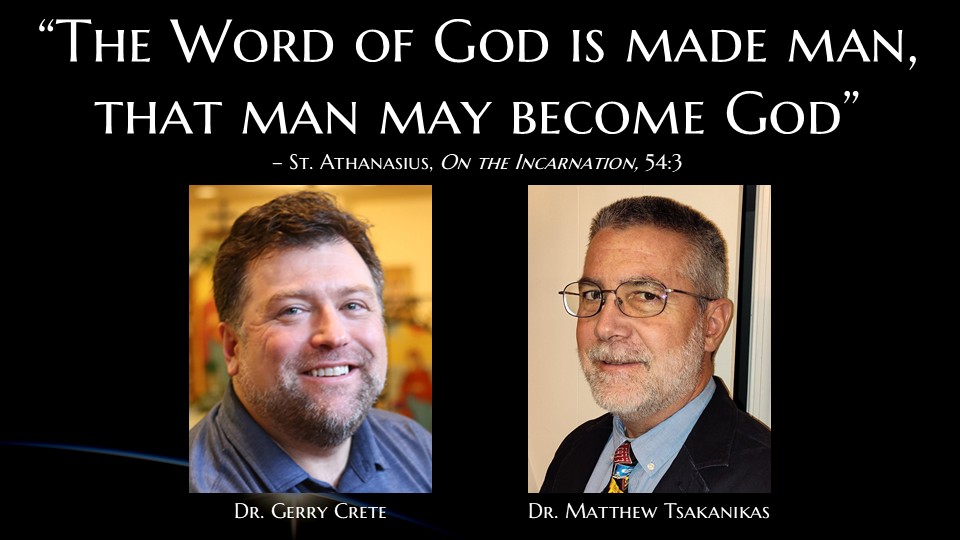
Deification is a secret in the Catholic Church that really shouldn’t be a secret. Join Dr. Gerry, Dr Matthew Tsakanikas, professor of theology at Christendom College, and Dr. Peter for a wide-ranging discussion of the glory, the adventure, the awe of partaking of God’s divine nature with the entirety of our being – our hearts, souls, minds, bodies, innermost selves, and all our parts, from a perspective informed by Internal Family Systems and grounded in a Catholic anthropology and metaphysics. What does it really mean for all of you to be a beloved little son or beloved little daughter of God?
Check it out here or wherever you listen to podcasts.
New Post Traumatic Growth podcast episode with Dr. Gerry – “God Doesn’t Hate Me After All”
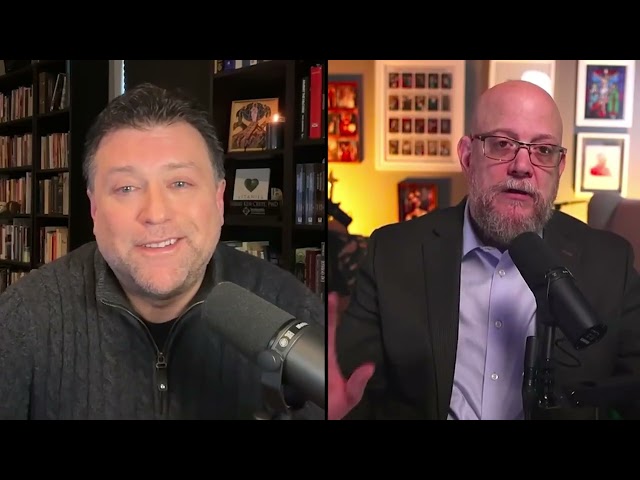
In this episode of Post-Traumatic Growth, Dr. Gerry sits down with Greg Willits—author, Catholic media pioneer, and co-founder of Rosary Army—to discuss his journey through complex trauma, PTSD, and the healing he's found through therapy, the sacraments, and the writings of St. Louis de Montfort. Greg shares his story with remarkable vulnerability, tracing how his deepest wounds became the foundation for his most meaningful work.
RCC registration coming up – get on the interest list!
We'll open our 13th cohort of the Resilient Catholics Community (RCC) in just less than one month. Are you interested in learning more?
If so, join Dr. Peter, Bridget Adams and David Saunders for a live information meeting. Learn how to apply for the St. Mary Magdalene cohort, which opens June 1, and ask any questions you may have about the application process and community membership. Join us on Tuesday evening, May 26 from 8:30 PM to 9:30 PM Eastern time. Here is the link to register.
We will also put the recording of that meeting up on our RCC landing page, where you can more details, including this 19-minute experiential exercise to help you discern about applying to the RCC. Also check out testimonials from RCC members who share their own experiences.
Scripture for Your Inner Outcasts
In today's episode of Scripture for Your Inner Outcasts, Dr. Gerry reflects on how our exiles can feel unfairly crippled from birth. You can also check out yesterday’s episode from the Fifth Sunday of Easter as Dr. Peter and Dr. Gerry discuss the importance of experiencing God for who He truly is. Scripture for Your Inner Outcasts, to our knowledge, is the only podcast specifically for parts of us who are exiled and who feel alone, bringing light, love, and hope to our exiled parts. Check it out every day on our landing page or wherever you get your podcasts and share it with those you think it might help.
Online workshop for Catholic formators new to IFS
If you're a Catholic therapist, coach, spiritual director, priest or other formator who professionally accompanies others, and you are interested in learning more about Internal Family Systems, take advantage of our upcoming free workshop. Catholic Parts Work in Human Formation will be held on June 10, 2026 from 8:00 PM to 9:30 PM Eastern time. Details are in this downloadable PDF. Registration is free, but required.
Catholic formators' in-person retreat in Bloomington, Indiana
Consider joining us for our 2026 retreat, an opportunity for formators (therapists, coaches, spiritual directors, priests, any Catholic who accompanies others in formation) to make a leap forward in your human formation work.
This retreat focuses on you finding and loving you in more of your parts, including parts you have not yet encountered – your exiles – and for those parts you have met, but who your manager parts frequently forget. And, we focus on how your parts can help you “be with” others in formation in ways that lead to healing and flourishing.
We'll be meeting August 10-13, 2026, in Bloomington, Indiana, at the lovely Mother of the Redeemer Retreat Center. Get the details in our flyer or on our landing page. You do not need to be a member of the Formation for Formators community, our online community of Catholic formators, to go on retreat.