
By Monty De La Torre, Ph.D.
In Part I of this series, I introduced some of the metaphysical principles needed to properly understand parts from the lens of Thomistic philosophy.
In this reflection, we continue to provide more necessary metaphysics. As I reflected on part I, it occurred to me that the investigation must examine parts in light of the four causes. These causes, as I previously noted in the reflection titled On the Metaphysics of the Human Person, provide a fundamental account of how something exists. Thus, a metaphysical investigation of parts should entail an investigation into their material, formal, efficient, and final causes.
In that previous reflection, I stated that a part exists as an accident and not as a substance. An accident is a feature of a substance and cannot exist independently of it. Therefore, a substance is metaphysically prior to its accidents. All this to say, if we want to answer the question, “What is a part?” then we must begin with what is foundational and work our way up the metaphysical ladder.
In Part I, I introduced the internal senses. The internal and external senses make it possible for us to know the material world. However, as will be explained below, the knowledge grasped by the external and internal senses is not yet human or intellectual knowledge in the proper sense.
Achieving human knowledge, which is knowledge of the essences of things, requires the actualization of two further powers: the agent and passive intellect. I will give a brief explanation of these powers and how we arrive at intellectual knowledge, and how it relates to parts.
Intellectual knowledge
According to Aristotle, the mind is a kind of blank slate or tabula rasa (See here, part 4). Whatever comes to be in the mind must originate from the outside via the external senses.
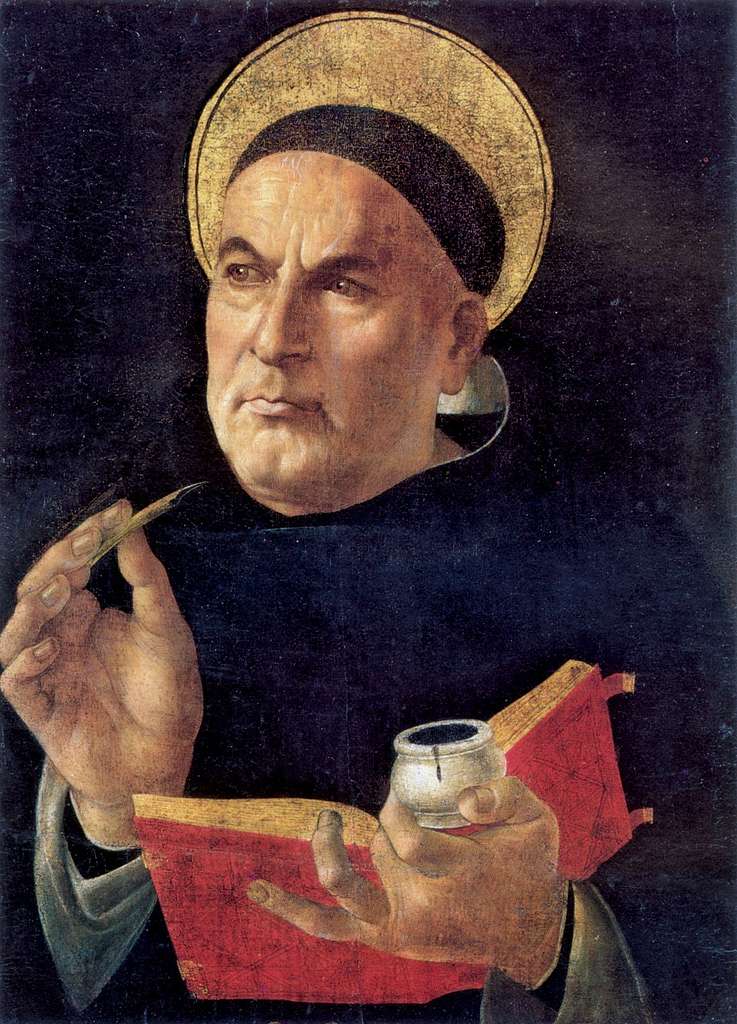
St. Thomas also held this position. In his treatise on truth, he claims that “Nothing is in the intellect that was not previously in sense.” In other words, our intellectual knowledge is contingent upon the external and internal senses. The soul’s potency for knowledge can only be actualized by something already in act. It is our encounter with the material world that initiates or actualizes the entire process of knowledge. As Fr. Dodds notes
“The dependence of the intellect on the senses is also indicated by the fact that we can have no ideas of objects whose sensible qualities are unknown. A blind person, for instance, has no idea of color. By introspection we can also see that we never have an idea in our mind without having some image in our imagination, however inadequate that image might be (as is evident, for instance, when we try to think of God). Every act of the intellect requires an act of the imagination to supply it with a proper image or phantasm.” (Dodds, 2014, p. 44)
Without the external and internal senses, it would be impossible for us to move from an animal point of view to a human one. How do we go from the former to the latter? From sense knowledge to intellectual knowledge? That transition is made possible by the agent and passive intellect.
The agent and passive intellect
“Human knowledge can be said to come fully into its own, to qualify as specifically human, when it makes the transition from the kind of knowledge which is derived from sensation to the kind which results from operations which are peculiarly intellectual.” (McInerny, 2016, p. 160)
What makes human knowledge peculiarly intellectual is its immaterial, abstract, and universal character. Sense knowledge is knowledge of particulars or numerically distinct things. For example, your dog, Fido, is an individual dog. Intellectual knowledge, on the other hand, is knowledge of the essence of a thing. For example, Fido, is a dog which is a kind of animal. Dog and Animal, are universals (Think in terms of species, genus, categories, kinds, etc.).
“Because our phantasms are particular and subject to the conditions of matter while our ideas are universal and abstract, there must be a power that bridges the gap between the two and makes the phantasm available to the intellect. We call this power the ‘agent intellect’ or ‘active intellect’. Without the action of the agent intellect, phantasms remain only potentially intelligible.” (Dodds, p.44)
If we know the essence of a thing, then we must possess the power or potency to do so. This power is what St. Thomas called the agent intellect.
“Now nothing is reduced from potentiality to act except by something in act; as the senses as made actual by what is actually sensible. We must therefore assign on the part of the intellect some power to make things actually intelligible, by abstraction of the species from material conditions. And such is the necessity for an active intellect.”
To potentially sense something is not to actually sense something. The external and internal senses do not actualize themselves. The material world is necessary for their actualization. Once those powers are actualized, we receive sense knowledge, but have yet to arrive at intellectual knowledge. The agent and passive intellect have yet to go from potency to act. First is the agent intellect. Its job is to abstract away the essence from the matter of a thing. D. Q. McInerny provides a great summary of the agent intellect’s function.
“The agent intellect, then, is the abstracting power of the intellect, and its abstracting activity consists precisely in this: (a) it ‘takes away’ from the sense image what is essential to it, the representational equivalent of the substantial form in the actual object in the external world to which the image refers; and (b) it ‘leaves behind’ all the accidental qualities that pertain only to this particular physical object. For example, sense knowledge presents to the intellect an image of a little gray-colored furry creature with nervous habits and a busy tail, and from that image the agent intellect abstracts the nature of squirrel, squirrel-ness if you will, that which this particular creature shares with others of the same kind.”
After the agent intellect has done its work, it remains for the passive intellect to finish the process of attaining human knowledge. The passive intellect is the power that produces the actual idea of something: triangularity, animality, the universe, etc. The agent intellect goes from potency to act when it abstracts away the essence of a thing. However, what is abstracted away is in potency to be understood as an idea. This is a completely different potency.
On the one hand, there is (a) the act of abstraction and on the other, there is (b) the abstracted essence understood specifically as an idea. The latter potency is the responsibility of the passive intellect. Once it receives the essence from the agent intellect, it then goes from potency to act and turns that information into an actual idea. D.Q. McInerny provides a succinct summary of the entire process of acquiring ideas, also known as ideogenesis.
“The process by which our ideas come into being (ideogenesis) begins with the presence of physical stimuli of various kinds (light, sound, smell, etc.) which activate the external senses. The data which is generated by the external senses as the result of their activity is then processed by the common sense, and the result of this processing is the percept, or the incomplete sense image. The imagination, memory, and cogitative sense then each make their specialized contributions to the percept, resulting in the complete sense image, or phantasm. The phantasm is then illuminated by the agent intellect, which abstracts from it its essential nature. This essential nature is then passed on to the possible intellect, which makes from it an idea.”
The purpose of the external and internal senses, and ideogenesis, culminates in what is known as the three acts of the intellect or mind: Simple apprehension, Judgment, and Reasoning.
Simple apprehension or apprehension is the act by which the mind grasps the essence of a thing. We know that a dog is a dog; that a cat is a cat; that a squirrel is a squirrel, etc. Apprehension is the initial and simple epistemological grasp of what something is.
Judgment is when we make factual statements about those things we apprehend in the first act of the mind. These judgments are typically either affirmative or negative. For example, “A dog has four legs and a tail” or “A dog is not a cat.” Judgment is more advanced than apprehension because it entails the use of language to confirm that what is in our mind corresponds with reality or truth.
Reasoning takes place when we combine judgments to form a conclusion. Here is a classic example:
All men are mortal.
Socrates is a man.
Therefore, Socrates is mortal.
There is a clear hierarchy at play with these three acts. Apprehension and Judgment are directed toward Reasoning; and all function to fulfill the primary end of our intellect and will, which is to know and pursue the truth.
Bringing it together: A Thomistic conceptualization of parts
So, what do the agent and passive intellect and the three acts of the mind have to do with parts? Without these powers and operations, parts could not exist. The person-like behavior of parts is not sui generis. As accidents, they belong to a substance.
Although parts are understood as subpersonalities that seem to function like separate human beings would, they are not actual persons. The memories, emotions, thoughts, intentions, and more that parts communicate must originate via the external and internal senses, and the agent and passive intellect of the individual substance and not its accidents. In short, it is the human being that experiences the world and provides the sense and intellectual knowledge which parts are working from when actualized.
This is straightforward given the substance accident distinction. However, a part is not just any kind of accident. Here, it is important to distinguish between a proper accident from a contingent one.
“A proper accident or property is an accident that follows or flows from a thing’s nature or substantial form. For example, the capacities for humor and free choice follow from a human being’s nature as a rational animal, and are thus properties of human beings as such. A contingent accident is one that does not follow or flow from a thing’s nature, and thus may or may not be present in something of that nature. For example, having light skin and having dark skin are merely contingent accidents of human beings, which is why some human beings have light skin and some dark skin. Skin color is not a property of human beings as such, in the relevant sense.” (Feser, 2014, p. 192)
The capacity for “parts talk” is a proper accident of the rational soul. Only human beings are capable of the self-reflective and didactic activity that we associate with parts. Therefore, without this proper accident, we would cease to be human. To be sure, without sense and intellectual knowledge, and the powers of apprehension, judgment, and reasoning, parts could not exist. All this to say, parts are a foundational part of the soul, but they are not themselves the soul.
Another line of inquiry in my philosophical investigation of parts is their relationship with our emotions or passions. It is common to attribute emotions to our parts. For example, the “Angry Part,” and the “Sad Part,” and the “Joyful Part,” etc. Parts seem to communicate a full range of feelings. So, what is the connection between the affective life and parts? That will be the subject of Part III.
References
- Q. McInerny. (2016). Philosophical Psychology. The Priestly Fraternity of Saint Peter.
Dodds, Michael J. (2014). Philosophical Anthropology. 2nd Edition. Western Dominican Province.
Feser, Edward. (2014). Scholastic Metaphysics: A Contemporary Introduction. Editiones Scholasticae.
Grounding parts work in a Catholic anthropology and metaphysics
If you are interested in learning more about the anthropological and metaphysical basis for an authentic Catholic parts work approach, how we harmonize Internal Family Systems (IFS) with the truths of the Catholic Faith, check out our series in the podcast Interior Integration for Catholics, in our deep dive into these topics in 2025 and 2026. You can download a PDF with episode descriptions and links here.
Finding out more about Internal Family Systems in a workshop for formators
Back on January 13, 2026, Dr. Peter and Bridget Adams hosted a free introductory workshop on Internal Family Systems from a Catholic perspective for formators (therapists, coaches, spiritual directors, priests, and other formators who accompany individuals in their personal formation). Here is the video, transcript, outline with links, and a special Resource Sheet.
On June 10, 2026 from 8:00 PM to 9:30 PM Eastern time, they enter will lead another free workshop to continue that introduction, titled Catholic Parts Work in Human Formation. Details are in this downloadable PDF. Registration is free, but required.
Conversation hours with Dr. Peter
Dr. Peter’s conversation hours are every Tuesday and Thursday from 4:30 PM to 5:30 PM Eastern time; you can reach him on his cell phone at 317.567.9594 for private conversation, up to about 10 minutes to discuss any of Souls and Hearts’ content, to inquire about the Resilient Catholics Community, or the Formation for Formators Community, or about any other topic about parts and Catholicism that is on your mind. He can’t provide any clinical services such as assessment or therapy, but he is happy to talk with you about our content.
Scripture for Your Inner Outcasts
Lisa Barrett reminds our inner exiles that Jesus doesn't condemn you as sometimes our managers are wont to do in today’s episode of Scripture for Your Inner Outcasts. You can also check out yesterday’s episode from the FIfth Sunday of Lent as Dr. Peter and Dr. Gerry discuss how our exiles come "back to life" through unburdening and healing that ultimately comes from God. Scripture for Your Inner Outcasts, to our knowledge, is the only podcast specifically for parts of us who are exiled and who feel alone, bringing light, love, and hope to our exiled parts. Check it out every day on our landing page or wherever you get your podcasts and share it with those you think it might help.